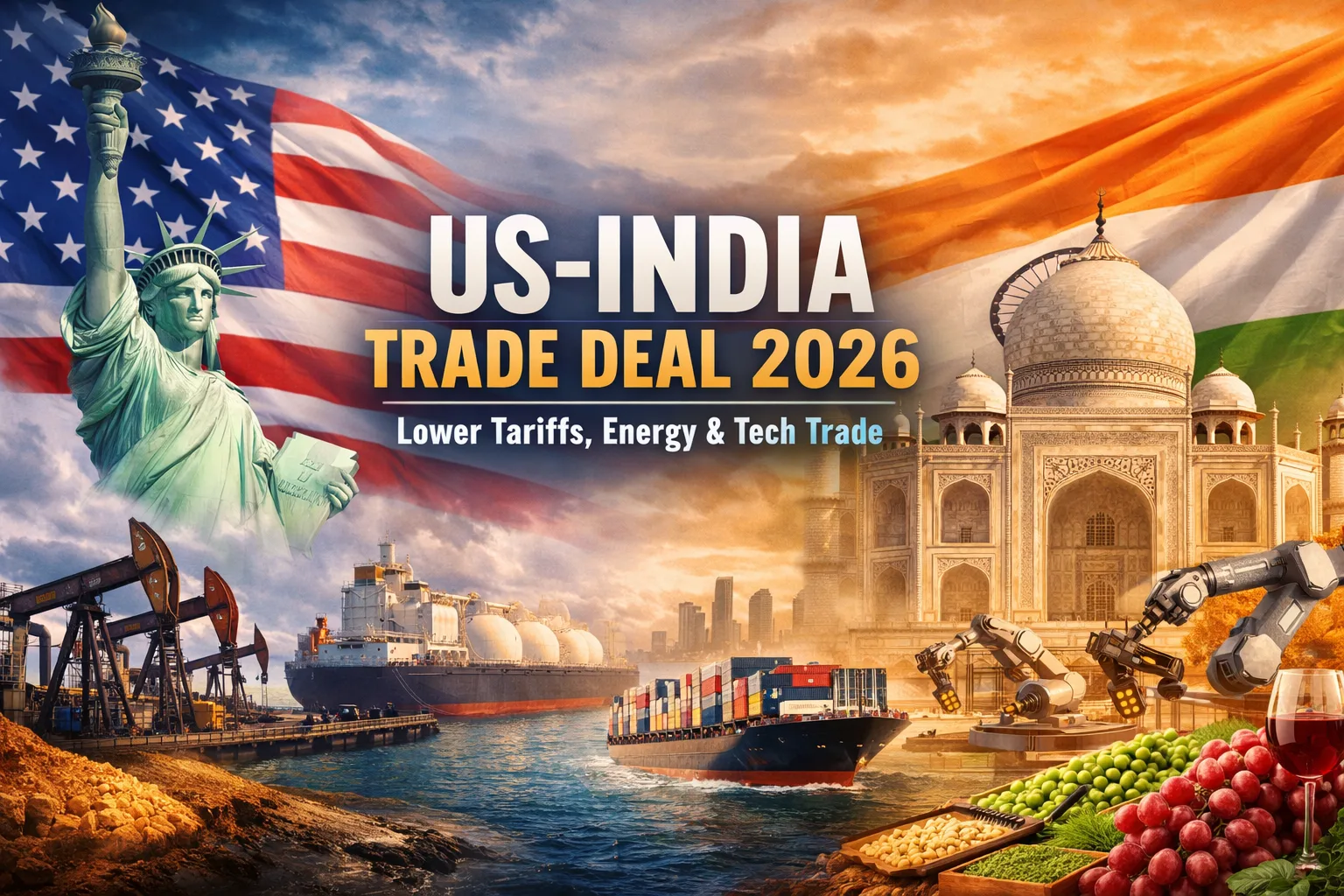
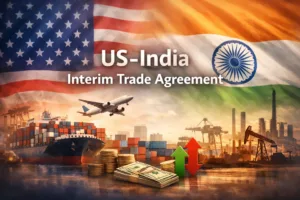
The United States and India have agreed on a major trade framework to reduce tariffs and expand market access. The deal lowers U.S. duties on Indian goods while India cuts tariffs on American industrial and agricultural exports. Both countries also committed to large scale cooperation in energy, technology, and digital trade.
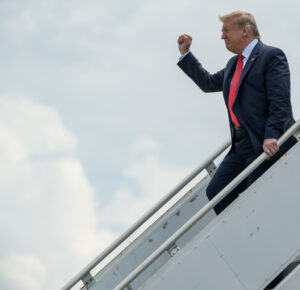
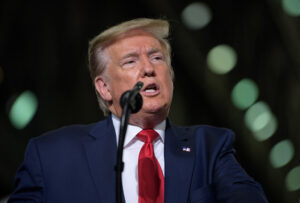
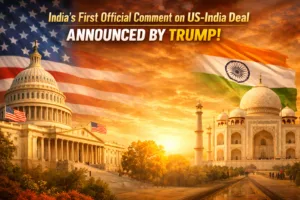
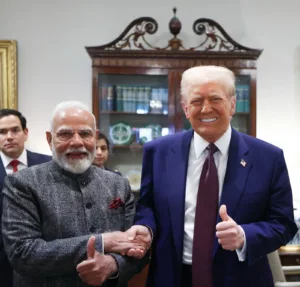
President Donald Trump announced the deal on February 2, 2026, after a call with Indian Prime Minister Narendra Modi. A formal Joint Statement was then released on Friday U.S. time, confirming the framework and policy actions. The agreement affects exporters, farmers, tech firms, and energy companies in both countries.
The announcement was formalized through the White House following discussions between the two leaders.
What Happened in the February 2026 US India Trade Deal
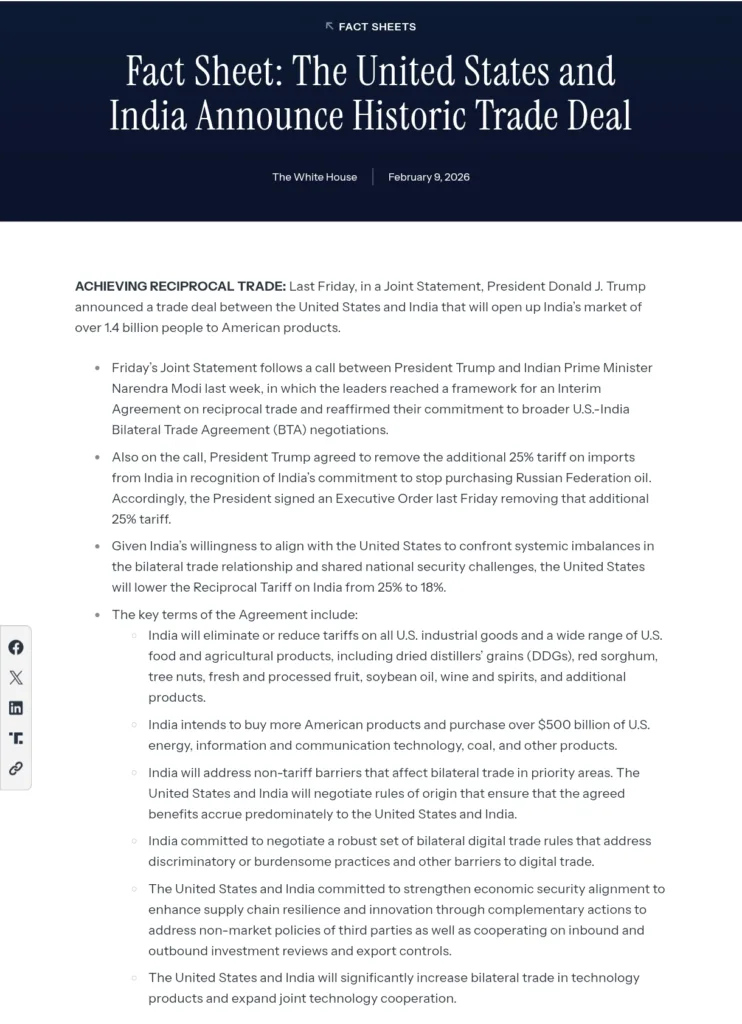
On February 2, 2026, President Trump announced a trade deal framework after speaking with Prime Minister Modi. The framework outlines an Interim Agreement on reciprocal trade and opens the path toward a broader Bilateral Trade Agreement.
Later, a Joint Statement released Friday U.S. time confirmed the commitments. On that same day, the U.S. signed an Executive Order removing an additional 25% tariff previously imposed on Indian imports.
The U.S. will also lower its reciprocal tariff on India from 25% to 18%. In return, India will eliminate or reduce tariffs on U.S. industrial goods and a wide range of agricultural products.
Why the US India Reciprocal Trade Agreement Happened
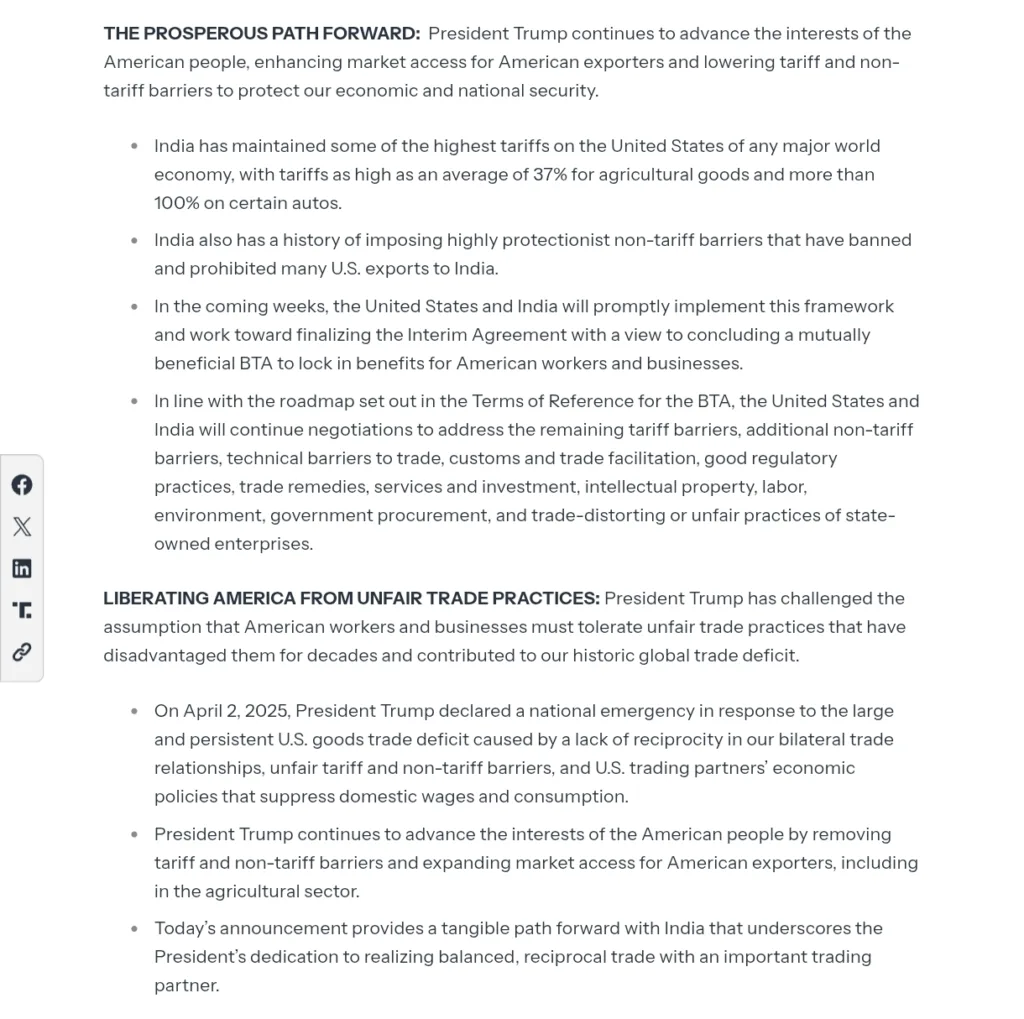
The U.S. has argued that India maintained some of the highest trade barriers among major economies. U.S. officials cited average agricultural tariffs near 37% and duties above 100% on certain automobiles.
Washington also raised concerns over non tariff barriers that restricted American exports through regulations and standards. The new framework addresses these issues in priority sectors.
India’s move to align more closely with the U.S. on energy sourcing and economic security helped unlock tariff relief. The agreement reflects shared goals on reducing trade imbalances and strengthening supply chains.
Bigger Context Behind US India Trade and Economic Security Cooperation
The agreement covers more than tariffs. Both countries committed to stronger cooperation in technology, digital trade, and investment oversight.
India will remove its digital services taxes. The two sides will negotiate digital trade rules to prevent customs duties on electronic transmissions and reduce discriminatory digital policies.
They also agreed to coordinate on export controls and inbound and outbound investment reviews. This shows deeper economic security alignment in critical technologies.
How the US India Trade Deal Affects Markets Companies and Consumers
U.S. exporters of industrial goods and farm products could gain better access to India’s market of more than 1.4 billion people. Agriculture, energy, and technology sectors are expected to benefit most.
India intended to purchase over $500 billion of U.S. energy, information and communication technology, agricultural goods, coal, and other products. This supports American producers and suppliers.
Indian exporters benefit from lower U.S. tariffs, improving competitiveness in the American market. Consumers in both countries could see wider product availability over time.
What Happens Next in the US India Bilateral Trade Agreement Talks
The Interim Agreement is a starting framework, not the final deal. Both countries will now work to implement the terms and finalize details in the coming weeks.
Future negotiations will address remaining tariff barriers, services trade, investment rules, intellectual property, labor, environment, and government procurement.
Rules of origin will also be negotiated to ensure trade benefits mainly go to U.S. and Indian producers rather than third countries.
Frequently Asked Questions
When did Trump announce the US India trade deal?
President Trump announced the trade framework on February 2, 2026, after a call with Prime Minister Modi. A Joint Statement followed on Friday U.S. time.
What tariff changes did the United States make?
The U.S. lowered its reciprocal tariff on India from 25% to 18% and removed an additional 25% tariff on Indian imports.
What did India agree to do under the deal?
India will cut tariffs on U.S. industrial and agricultural goods, remove digital services taxes, and increase purchases of U.S. products.
How large are India’s planned purchases from the U.S.?
India intended to buy over $500 billion worth of U.S. energy, technology, agricultural goods, coal, and other products.
Conclusion
The February 2026 US India trade framework marks a major step toward lower tariffs, expanded energy and technology trade, and closer digital and economic security cooperation. Further negotiations will determine the depth of integration under a full Bilateral Trade Agreement.

BBW News Desk is the editorial team of BigBreakingWire, a digital newsroom focused on global finance, markets, geopolitics, trade policy, and macroeconomic developments.
Our editors monitor government decisions, central bank actions, international trade movements, corporate activity, and economic indicators to deliver fast, fact-based reporting for investors, professionals, and informed readers.
The BBW News Desk operates under the editorial standards of BigBreakingWire, prioritizing accuracy, verified information, and timely updates on major global developments.

















Be First to Comment