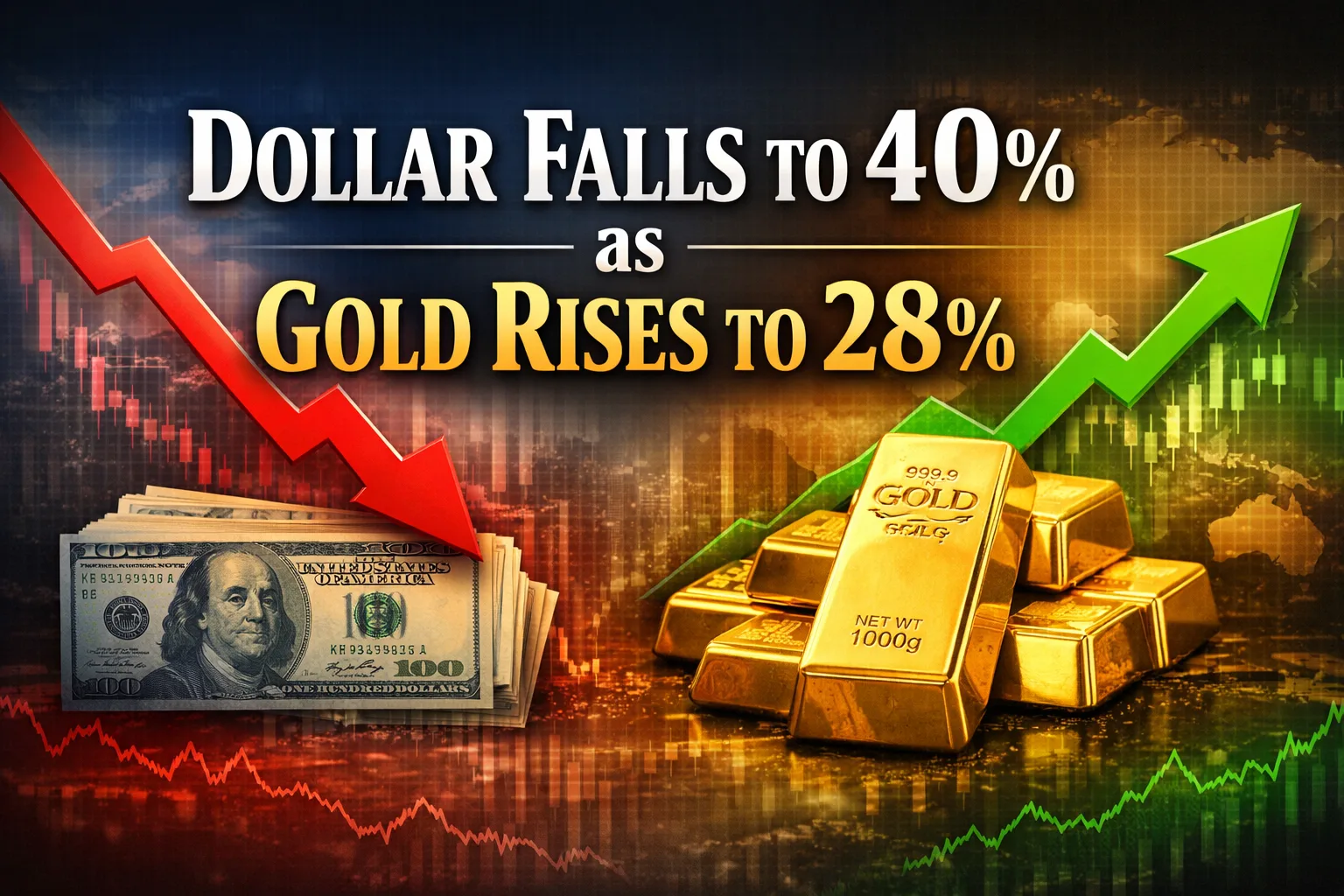
The role of the US dollar in global foreign exchange reserves is shrinking rapidly. According to recent data, the dollar now makes up about 40 percent of total global reserves. This is the lowest level seen in at least the last twenty years.
Why Is the US Dollar Losing Share
Over the past decade, central banks across the world have been slowly reducing their dependence on the US dollar. In just ten years, the dollar’s share has dropped by nearly 18 percentage points.
This shift reflects growing concerns over US debt levels, geopolitical risks, sanctions, and long term currency stability. Many countries now prefer to diversify their reserves instead of relying heavily on a single currency.
Gold Becomes the Biggest Winner
As the dollar lost ground, gold emerged as the biggest beneficiary. Gold’s share in global reserves has climbed to around 28 percent, its highest level since the early 1990s.
Gold now accounts for a larger share of reserves than the euro, Japanese yen, and British pound combined. This shows a clear move by central banks toward hard assets that are not controlled by any single country.
Why Central Banks Are Buying More Gold
Gold is seen as a safe asset during times of economic uncertainty. It carries no credit risk, cannot be frozen by sanctions, and holds value during inflation or currency weakness.
In a world facing rising geopolitical tensions and financial instability, central banks view gold as a reliable store of value.
Impact on Global Markets
This major shift in reserves has already had a strong impact on financial markets.
Gold prices surged nearly 65 percent in 2025, marking the biggest annual increase since 1979. At the same time, the US dollar index fell about 9.4 percent, its weakest yearly performance in eight years.
What This Means Going Forward
The data suggests that the global financial system is slowly moving away from dollar dominance. While the US dollar remains the world’s most important reserve currency, its influence is clearly declining.
Gold’s rising role highlights a long term shift toward asset safety, diversification, and independence from political risk. If this trend continues, gold may remain a central pillar of global reserves for years to come.
Key Takeaways
- US dollar share of global reserves has fallen to 40 percent
- Gold share has risen to 28 percent, the highest since the 1990s
- Gold now exceeds euro, yen, and pound combined in reserves
- Gold prices jumped 65 percent in 2025
- Dollar index dropped 9.4 percent in the same year

BBW News Desk is the editorial team of BigBreakingWire, a digital newsroom focused on global finance, markets, geopolitics, trade policy, and macroeconomic developments.
Our editors monitor government decisions, central bank actions, international trade movements, corporate activity, and economic indicators to deliver fast, fact-based reporting for investors, professionals, and informed readers.
The BBW News Desk operates under the editorial standards of BigBreakingWire, prioritizing accuracy, verified information, and timely updates on major global developments.
































Be First to Comment