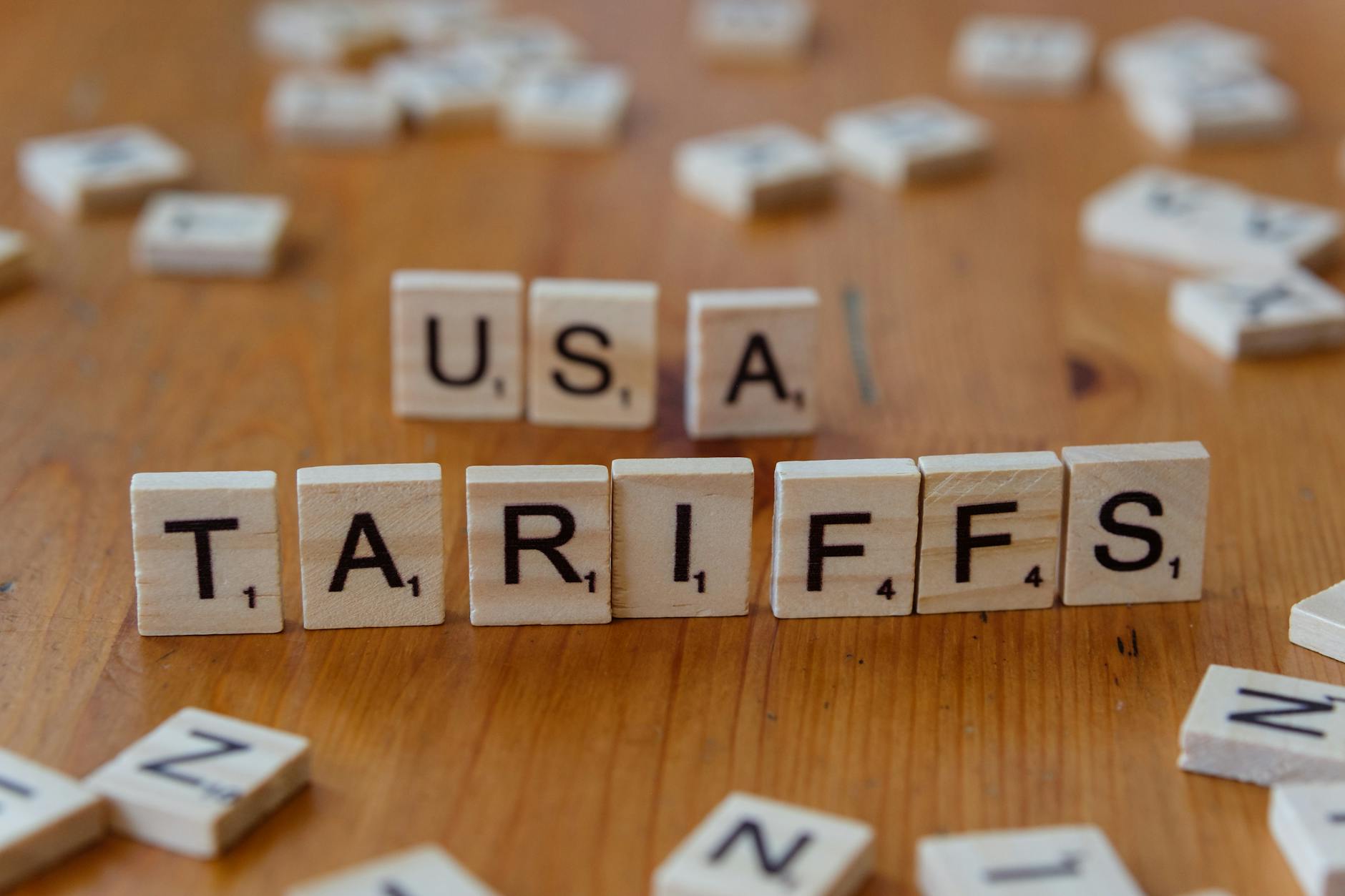
The United States has launched new trade investigations targeting 16 major global economies under Section 301 of the Trade Act of 1974, citing concerns over excess manufacturing capacity and unfair trade practices.
The investigation announced on March 11, 2026 by the Office of the United States Trade Representative (USTR) will examine whether industrial policies in countries such as China, the European Union, Japan, India, and Vietnam distort global trade and harm U.S. commerce.
Officials argue that persistent overproduction in sectors like steel, automobiles, semiconductors, and solar equipment is flooding global markets and weakening American manufacturing competitiveness.
The move could reshape global trade relations, potentially leading to tariffs, trade restrictions, or new negotiations between Washington and some of its largest trading partners.
What Happened in the Section 301 Investigation Announcement
The U.S. Trade Representative Jamieson Greer formally initiated Section 301 investigations into the industrial policies of 16 economies, including China, the European Union, Japan, India, Mexico, South Korea, Vietnam, Taiwan, Bangladesh, Singapore, Switzerland, Norway, Indonesia, Malaysia, Cambodia, and Thailand.
Section 301 of the Trade Act of 1974 allows the United States government to investigate and respond to foreign policies considered unfair or discriminatory toward U.S. commerce. The provision has historically been used to impose tariffs or other trade remedies.
According to the USTR, the investigation will focus on structural excess capacity in manufacturing sectors, where governments may be supporting production levels far beyond domestic demand through subsidies, financial support, or state-directed industrial policies.
The USTR will begin consultations with the governments involved while also opening a public comment process starting March 17, 2026. Public hearings will begin May 5 at the U.S. International Trade Commission in Washington.
| Key Investigation Details | |
| Policy Tool | Section 301 of Trade Act of 1974 |
| Announcement Date | March 11, 2026 |
| Public Comment Deadline | April 15, 2026 |
| Public Hearings Begin | May 5, 2026 |
| Countries Under Investigation | 16 economies including China, EU, Japan, India |
Why Did the United States Launch the Investigation
Washington argues that global manufacturing capacity has grown faster than global demand, creating structural imbalances in international trade. According to U.S. estimates, global manufacturing capacity utilization is currently between 75 percent and 75.9 percent, below the roughly 80 percent level considered healthy for industrial sectors.
This gap suggests that factories around the world are producing more goods than markets can absorb. When domestic consumption is insufficient, producers export the surplus to international markets, particularly to the United States, which remains the world’s largest consumer economy.
U.S. officials claim that government policies in several countries encourage companies to maintain excess production through subsidies, state-backed financing, export incentives, or controlled wages. These policies allow firms to continue producing even when market demand weakens.
From Washington’s perspective, such practices undermine U.S. industries by pushing down global prices and discouraging domestic investment in manufacturing.
Bigger Context Behind Global Manufacturing Overcapacity
The debate around excess industrial capacity has been intensifying over the past decade as global supply chains have expanded rapidly. Emerging economies, particularly in Asia, have built massive industrial ecosystems focused on export-led growth.
According to the World Bank, global manufacturing output reached about $16.6 trillion in 2024. However, the distribution of that output has shifted dramatically toward Asia and Europe.
China, Germany, and Japan now generate a significantly larger share of their GDP from manufacturing compared with the United States. Manufacturing contributes about 28.1 percent of GDP in China and 22.7 percent in Germany, compared with roughly 10.5 percent in the United States.
This structural difference reflects decades of economic policy choices. While many Asian and European economies maintained strong industrial policies, the United States increasingly shifted toward services, technology, and consumption-led growth.
| Manufacturing Share of GDP | |
| China | 28.1% |
| Germany | 22.7% |
| Japan | 21.7% |
| World Average | 17.2% |
| United States | 10.5% |
These differences have contributed to persistent trade imbalances. Countries with strong manufacturing sectors tend to run trade surpluses, while consumption-driven economies such as the United States run trade deficits.
In recent years, rising geopolitical tensions and supply chain disruptions during the COVID pandemic also pushed governments to reconsider industrial policy and domestic production capacity.
How the Investigation Affects Markets, Companies, Investors, and the Economy
The launch of Section 301 investigations introduces uncertainty into global trade relations, particularly for export-heavy economies. Investors are closely watching whether the process leads to tariffs, quotas, or other restrictions on imports.
Industries most likely to be affected include steel, automobiles, batteries, semiconductors, solar panels, shipbuilding, and heavy machinery. These sectors have experienced significant capacity expansion globally in recent years.
For companies operating across global supply chains, new tariffs or trade barriers could disrupt manufacturing networks and raise production costs.
Financial markets may also react to potential trade tensions. Trade conflicts historically create volatility in currency markets, commodity prices, and industrial stocks.
| Sectors Under Scrutiny | |
| Metals | Steel, aluminum, non-ferrous metals |
| Transport | Automobiles, ships, transport equipment |
| Technology | Semiconductors, robotics, electronics |
| Energy | Solar modules, batteries, energy equipment |
| Industrial Materials | Cement, glass, chemicals, plastics |
For emerging economies such as Vietnam, Bangladesh, and India, the investigation may also trigger diplomatic discussions with Washington about market access and industrial policies.
Meanwhile, U.S. policymakers view the probe as part of a broader strategy to rebuild domestic manufacturing capacity and secure supply chains for critical industries.
What Happens Next in the Section 301 Investigation
The investigation process will unfold over several months. After receiving written comments and holding public hearings in May, the USTR will analyze evidence regarding industrial policies and trade practices.
If the U.S. government concludes that the practices violate fair trade principles or harm U.S. industries, it could impose trade remedies such as tariffs, import restrictions, or negotiated settlements.
The Section 301 mechanism has previously been used in major trade disputes, including the U.S.-China trade conflict that began in 2018 and led to tariffs on hundreds of billions of dollars in goods.
Given the number of economies involved in the current investigation, the outcome could significantly influence global trade policy and supply chain strategy over the coming years.
Frequently Asked Questions
What is Section 301 of the Trade Act of 1974?
Section 301 allows the United States government to investigate foreign trade practices that are unfair or discriminatory and take action such as imposing tariffs or trade restrictions.
Which countries are included in the investigation?
The investigation covers 16 economies including China, the European Union, Japan, India, South Korea, Mexico, Vietnam, Taiwan, Bangladesh, Singapore, Switzerland, Norway, Indonesia, Malaysia, Cambodia, and Thailand.
Why is excess manufacturing capacity considered a problem?
When countries produce more goods than they can consume domestically, the surplus is exported globally, which can depress prices and weaken manufacturing industries in other countries.
When will the investigation results be known?
The process begins with public comments and hearings in May 2026. Any final trade actions may take several months depending on consultations and findings.
Conclusion
The U.S. decision to launch a wide-ranging Section 301 investigation signals growing concern in Washington about structural imbalances in global manufacturing.
With supply chains, industrial policy, and economic security increasingly linked to geopolitics, the outcome of this investigation could shape trade policy, manufacturing strategy, and global market dynamics for years.
As the hearings and consultations progress through 2026, investors, governments, and multinational companies will be closely monitoring whether the process evolves into another major chapter in global trade tensions.
Update: U.S. Section 301 trade probe sparks pushback from China, Japan reviewing impact
Japan’s Chief Cabinet Secretary Kihara said Tokyo will closely examine details of Donald Trump’s Section 301 trade probe and assess its potential impact on Japan’s economy.
China’s Foreign Ministry rejected the U.S. investigation, calling claims of “overcapacity” false and accusing Washington of political manipulation while reiterating opposition to unilateral tariff measures.
Indonesia’s Economic Affairs Ministry said it has received information about the U.S. unfair trade probes and will communicate with the U.S. Trade Representative regarding the move.

BBW News Desk is the editorial team of BigBreakingWire, a digital newsroom focused on global finance, markets, geopolitics, trade policy, and macroeconomic developments.
Our editors monitor government decisions, central bank actions, international trade movements, corporate activity, and economic indicators to deliver fast, fact-based reporting for investors, professionals, and informed readers.
The BBW News Desk operates under the editorial standards of BigBreakingWire, prioritizing accuracy, verified information, and timely updates on major global developments.





Be First to Comment