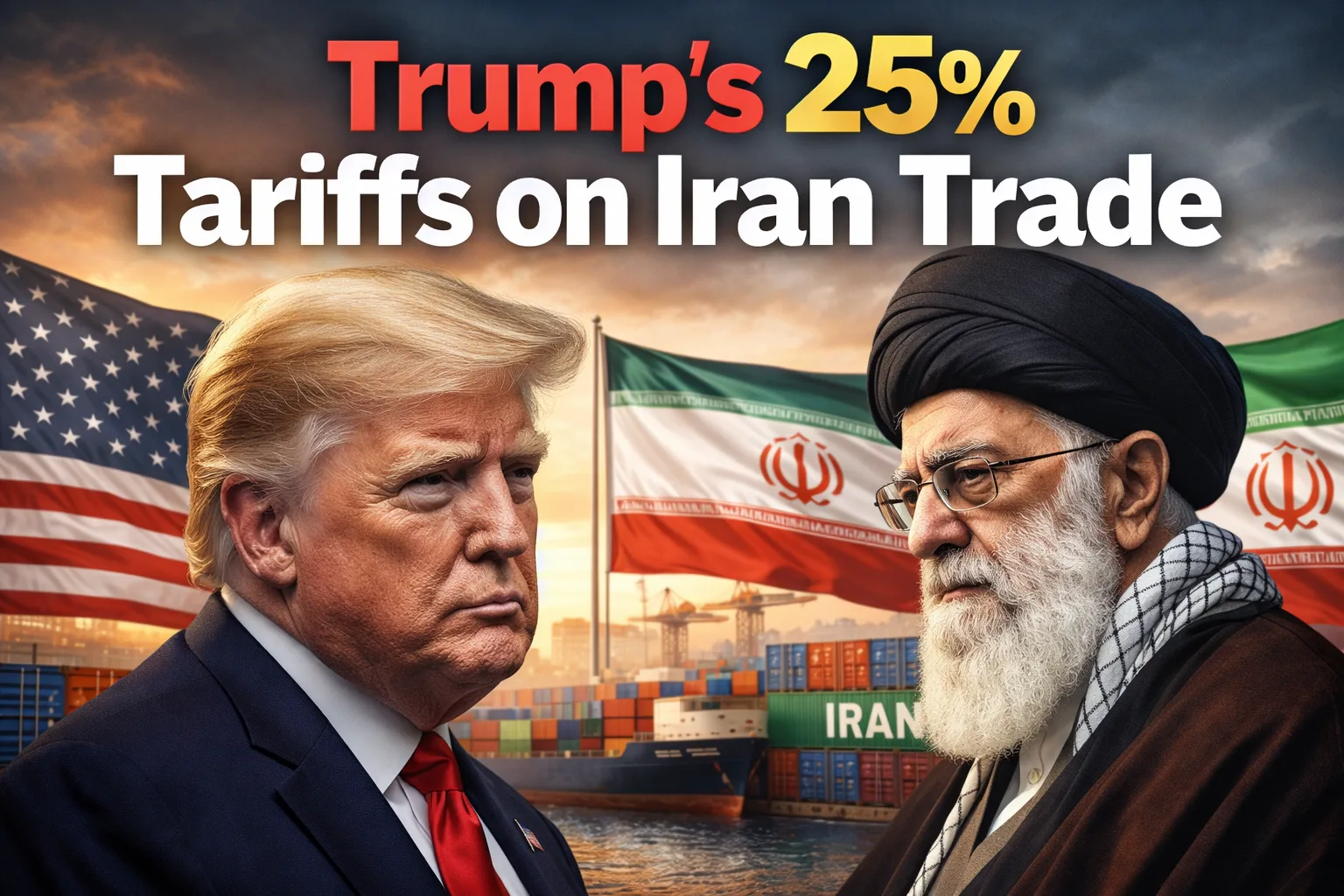
US President Donald Trump has announced a new 25 percent tariff on any country that continues to trade with Iran. The move has raised concerns among Indian exporters, especially those dealing in rice, food products and pharmaceuticals. However, early assessments suggest that the direct impact on India may remain limited.
Why Trump Announced the 25% Iran Tariffs
The tariff announcement is part of Washington’s broader strategy to tighten economic pressure on Iran. The policy targets countries that maintain trade relations with Tehran, even as geopolitical tensions in West Asia remain high. The tariffs are effective immediately, although detailed implementation guidelines are still unclear.
India Iran Trade Snapshot
India’s trade exposure to Iran is relatively small compared to its global trade volume.
- Total India Iran trade in FY25: $1.68 to $1.7 billion
- Share in India’s overall trade: around 0.15 percent
- India’s trade surplus with Iran: about $799 million
Key Indian Exports to Iran
India exports a wide range of goods to Iran, with food items dominating the list.
- Rice: $757.3 million, around 61 percent of total exports
- Organic chemicals: $512.9 million
- Edible fruits and nuts: $311.6 million
- Oil meals: $70.8 million
- Vegetables and fruits: $58.3 million
- Chemicals: $56.5 million
- Engineering goods: $43.3 million
- Drugs and pharmaceuticals: $40.7 million
- Tea: $37.9 million
- Spices: $29.1 million
Rice exports are particularly important for farmers and traders in Gujarat, Punjab, Haryana and parts of Uttar Pradesh.
India’s Imports from Iran
Imports from Iran fell sharply by about 29 percent last year to nearly $441.8 million. This decline has already reduced India’s exposure to any fresh trade restrictions.
Why Indian Exporters May Face Limited Impact
Most Indian trade with Iran falls under humanitarian categories such as food, agricultural products and medicines. These are generally permitted under US Office of Foreign Assets Control rules.
Ajay Sahai, Director General of the Federation of Indian Export Organisations, has stated that Indian companies strictly limit their dealings to food and pharmaceutical items and remain fully compliant with US sanctions.
In addition, many Indian exporters already operate under high US tariffs, including additional duties linked to Russian oil purchases. Compared to these, Iran related trade risks are relatively contained.
Global Concerns and US China Trade Impact
Trade experts warn that even the threat of new tariffs can hurt global confidence. Wendy Cutler, a former US trade negotiator, has said such moves could weaken trust in the fragile US China trade discussions.
China remains Iran’s largest trading partner, but countries like India, the UAE and Turkey are also significant. Any escalation could affect global supply chains and shipping routes.
Trump’s Iran Tariff Move Puts US–China Trade Truce at Risk
President Trump has announced immediate 25 percent tariffs on countries trading with Iran, creating fresh uncertainty around the fragile one year US–China trade truce. While details on enforcement are still unclear, experts warn the move could hurt trust and slow progress in talks between Washington and Beijing.
What Indian Exporters Should Do Now
- Review all contracts to ensure compliance with OFAC regulations
- Focus on humanitarian and permitted trade categories
- Stay updated on official notifications from the US and Indian authorities
- Monitor payment channels and banking arrangements carefully
Bottom Line
While Trump’s 25 percent tariffs on Iran traders sound aggressive, the actual risk for India appears manageable. India’s trade exposure to Iran is small, and most exports fall under approved humanitarian goods. Rice exporters should remain alert, but a major disruption is unlikely unless rules change significantly.
FAQs
Will Indian rice exports to Iran stop?
No. Rice is considered a humanitarian good and is currently permitted under US sanctions, provided compliance rules are followed.
Can Indian companies face US penalties?
Only if they violate OFAC rules. Companies following sanctioned trade guidelines are unlikely to face penalties.
Is this a big risk for India’s economy?
No. India Iran trade is a very small part of India’s total trade, so the macroeconomic impact is limited.

BBW News Desk is the editorial team of BigBreakingWire, a digital newsroom focused on global finance, markets, geopolitics, trade policy, and macroeconomic developments.
Our editors monitor government decisions, central bank actions, international trade movements, corporate activity, and economic indicators to deliver fast, fact-based reporting for investors, professionals, and informed readers.
The BBW News Desk operates under the editorial standards of BigBreakingWire, prioritizing accuracy, verified information, and timely updates on major global developments.











Be First to Comment