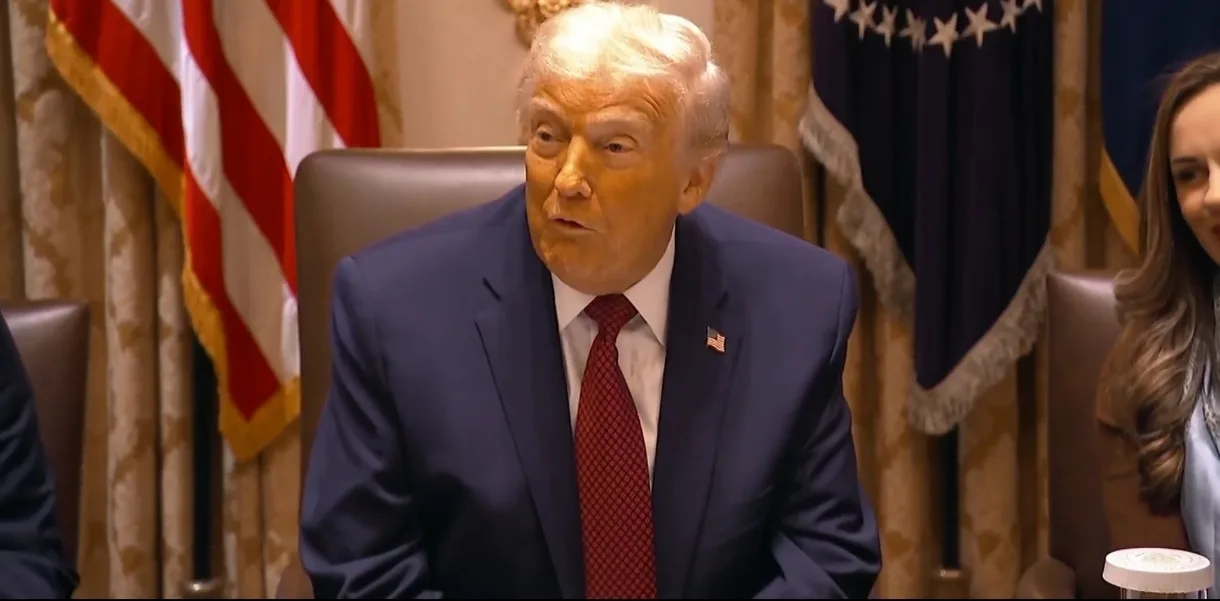
US President Donald Trump has indicated that his administration may impose new tariffs on agricultural imports from India and Canada, following strong concerns from American farmers about low-priced foreign goods entering the US market. The comments were made during a White House meeting where Trump unveiled a $12 billion support package for domestic farmers facing falling prices and rising production costs.
Why is India “Allowed to Dump Rice”? Trump Questions Trade Terms
During the meeting, Trump publicly questioned why India is “allowed to dump rice” into the US market without higher duties. He asked Treasury Secretary Scott Bessent whether New Delhi had any exemptions on rice imports. Bessent replied that the US was still negotiating a new trade deal with India.
Trump responded strongly, stating that Indian rice imports were hurting US farmers. He said he would “take care of” the issue and stressed that “you cannot do that,” referring to what he described as dumping practices by major rice-exporting nations. Farmers in states such as Arkansas, Louisiana, California, and Texas have been blaming falling rice prices on cheaper imports from India, Vietnam, and Thailand.
Potential Tariffs on Canada’s Fertiliser Exports
Trump also signalled new tariffs on fertiliser imports from Canada, noting that a significant share of US agricultural fertiliser comes from its northern neighbour. He suggested that imposing tariffs could help “bolster” domestic fertiliser production and reduce dependence on imports.
Canada is the largest foreign supplier of potash-based fertiliser to the US, and any additional duties could impact supply-chain costs for American farmers already dealing with inflation-driven increases in inputs.
US Farmers Warn $12B Aid Package Won’t Fix Deepening Industry Crisis
American farmers say the Trump administration’s $12 billion bailout offers only temporary relief as the agricultural sector continues to struggle. Producers report rising bankruptcies and declining crop income since 2022, noting that any projected improvement in 2024 farm earnings largely comes from federal support rather than real market recovery. Missouri farmer Marty Richardson called the plan “a Band-Aid,” stressing that growers “need more markets, not more aid,” while Maryland farmer Jennie Schmidt said few in the industry are enthusiastic about subsidies. Many fear 2026 could be just as challenging unless market conditions improve.
Farmers Face Rising Costs and Market Volatility
The President’s tariff remarks come at a time when farmers are coping with higher fuel, seed, fertiliser, and machinery costs. Several farm associations have argued that rising imports of low-priced rice and other commodities are pushing market prices downward, creating financial pressure on growers ahead of the next crop cycle.
The newly announced $12B farmer assistance plan includes $11B in one-time payments under the USDA’s Farmer Bridge Assistance Program, with the remaining amount directed toward sectors not covered under existing support schemes.
US–India Trade Tensions Continue
Washington and New Delhi have been in prolonged negotiations to resolve tariff disputes. Earlier this year, the Trump administration imposed 50% tariffs on several Indian goods, citing trade barriers and India’s energy procurement policies. A US delegation is expected to visit India this week, though officials do not anticipate a major breakthrough in talks.
India is one of the world’s largest exporters of rice, with annual shipments exceeding 20 million tonnes, including both basmati and non-basmati categories. The US imports a smaller share but remains a critical market for premium varieties.
Canada–US Trade Strains Re-Emphasised
Trump has repeatedly criticised Canadian trade practices, especially items not fully covered under the North American trade framework. His recent comments have renewed speculation that Canada–US trade agreements could face fresh scrutiny as the administration seeks stronger protections for American producers.
What Happens Next?
Any new tariffs on Indian rice or Canadian fertilisers would require formal rulemaking or executive action. Analysts say the administration may move swiftly due to pressure from farm groups, particularly in key agricultural states.
The White House has not yet released specific tariff percentages or timelines, but officials indicated that “all options remain on the table.”
Key Takeaways
- Trump suggests new tariffs on Indian rice and Canadian fertiliser.
- Farmers claim cheap imports are hurting domestic prices.
- A $12B support package announced for US farmers.
- US–India and US–Canada trade negotiations remain strained.
- No immediate tariff decision, but strong signalling from the administration.
India Denies U.S. Rice Dumping Allegations
India has rejected U.S. claims that it is dumping rice in the American market, saying its exports to the U.S. are mainly premium basmati rice, which sells at higher prices than non-basmati varieties. Trade Secretary Rajesh Agrawal said there is no clear case of dumping and no U.S. anti-dumping probe has been launched. India exported 20.2 million metric tons of rice in FY 2024/25, including 335,554 tons to the U.S., of which 274,213 tons were basmati

BBW News Desk is the editorial team of BigBreakingWire, a digital newsroom focused on global finance, markets, geopolitics, trade policy, and macroeconomic developments.
Our editors monitor government decisions, central bank actions, international trade movements, corporate activity, and economic indicators to deliver fast, fact-based reporting for investors, professionals, and informed readers.
The BBW News Desk operates under the editorial standards of BigBreakingWire, prioritizing accuracy, verified information, and timely updates on major global developments.






















Be First to Comment