

What Happened in SEBI’s Gold and Silver Valuation Policy Decision
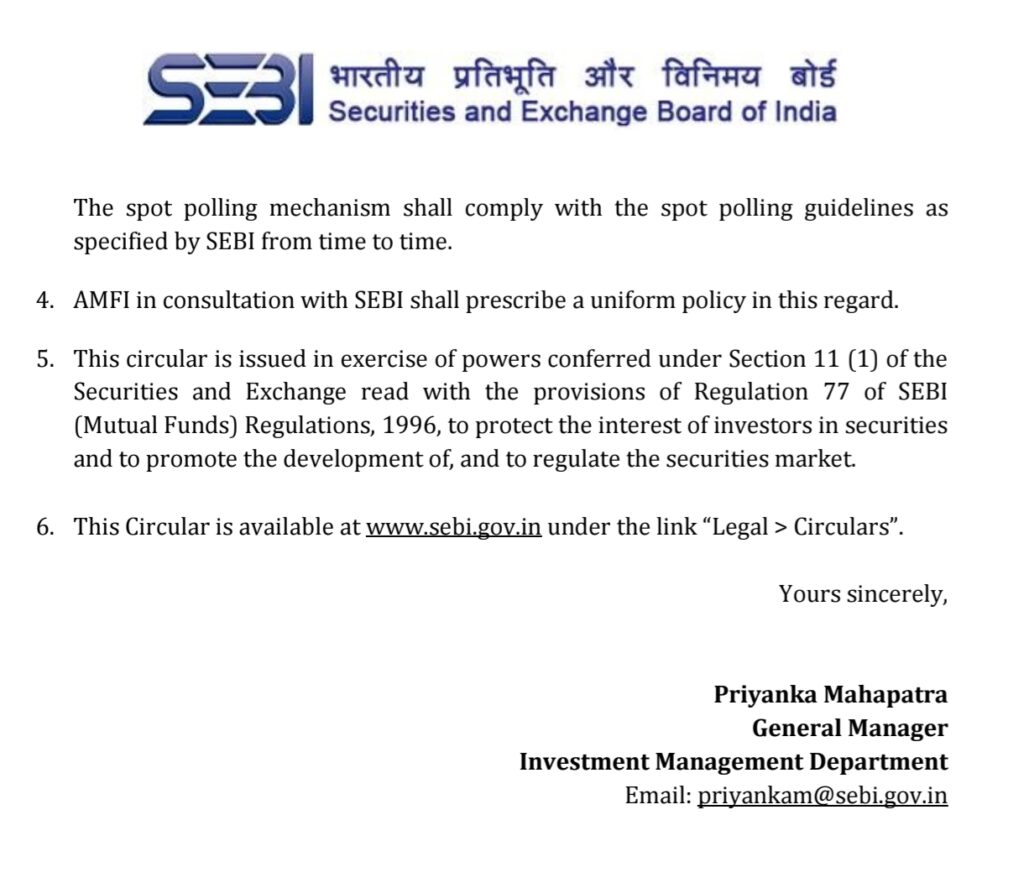
The Securities and Exchange Board of India (SEBI) issued a circular dated February 26, 2026, revising the valuation framework for physical gold and silver held by mutual fund schemes, especially Gold and Silver Exchange Traded Funds (ETFs). The new rule will come into effect from April 01, 2026.
Under the updated regulation, mutual funds will now value physical gold and silver using polled spot prices published by recognized Indian stock exchanges instead of relying primarily on London Bullion Market Association (LBMA) AM fixing prices.
This shift affects all Asset Management Companies (AMCs), trustees, and mutual fund schemes holding bullion assets, and is governed under SEBI (Mutual Funds) Regulations, 2026, along with Regulation 22(9) and 63(9).
Why Did the Valuation Rule Change Happen
The previous framework depended heavily on international benchmark pricing from LBMA, which required multiple adjustments such as currency conversion, customs duty, transportation cost, and domestic premiums. This often created valuation gaps between global prices and actual domestic market conditions.
SEBI’s decision aims to improve price discovery, transparency, and uniformity in valuation practices across mutual fund schemes. Using exchange-published spot prices reflects real domestic demand, liquidity, and settlement-linked pricing in the Indian bullion derivatives market.
The move also follows deliberations by the Mutual Fund Advisory Committee (MFAC) and stakeholder consultations, indicating a regulatory shift toward localized financial benchmarks in India’s asset management ecosystem.
Bigger Context Behind Gold and Silver Valuation in Economy and Geopolitics
Globally, gold pricing is influenced by geopolitical tensions, central bank reserves, inflation hedging demand, and currency volatility. India, being one of the largest gold consumers, imports over 700 to 900 tonnes of gold annually, making domestic price sensitivity significantly different from global benchmarks.
In recent years, geopolitical uncertainties, rising US interest rate cycles, and global inflation trends have increased investor allocation toward gold ETFs and bullion-backed financial products. This has raised the need for more localized and accurate valuation mechanisms aligned with domestic market realities.
Strategically, the policy also signals India’s broader financial market independence by reducing over-reliance on foreign price benchmarks like LBMA. This aligns with India’s long-term goal of strengthening domestic commodity exchanges and deepening financial market infrastructure.
How the New Valuation Norms Affect Markets, Companies, Investors, and Economy
The policy is expected to enhance transparency in NAV calculation of Gold and Silver ETFs, reducing valuation distortions caused by currency fluctuations between the US dollar and Indian rupee. This will benefit retail and institutional investors who rely on accurate asset pricing.
Asset management companies may need to recalibrate valuation models, data sourcing systems, and compliance frameworks before the April 2026 deadline. However, the long-term operational efficiency may improve due to standardized domestic pricing inputs.
| Impact Area | Expected Effect |
| Mutual Funds | More accurate NAV based on domestic spot prices |
| Investors | Improved transparency and fair valuation |
| Commodity Exchanges | Higher relevance in price benchmarking |
| ETF Market | Better alignment with Indian market demand |
From a market perspective, the rule may also increase trading depth in bullion derivatives contracts used for settlement-linked pricing, strengthening India’s commodity market ecosystem.
Policy Breakdown and Regulatory Framework
| Policy Element | Details |
| Regulator | Securities and Exchange Board of India (SEBI) |
| Circular Date | February 26, 2026 |
| Implementation Date | April 01, 2026 |
| Previous Benchmark | LBMA AM Fixing Prices |
| New Valuation Method | Polled Spot Prices from Recognized Stock Exchanges |
| Applicable To | Gold and Silver ETFs and Mutual Fund Schemes |
What Happens Next in India’s Bullion ETF and Mutual Fund Market
Going forward, AMFI in consultation with SEBI is expected to prescribe a uniform industry-wide valuation policy to ensure consistency across fund houses. This will likely standardize reporting practices and valuation disclosures.
The reform may also encourage greater institutional participation in gold and silver ETFs as valuation becomes more aligned with domestic liquidity and settlement mechanisms. Over time, this could strengthen India’s position as a price-influencing bullion market rather than a passive price taker.
If successfully implemented, the policy could reduce valuation volatility in bullion-backed schemes and improve investor confidence during periods of global economic uncertainty, inflation spikes, and geopolitical risk events.
Frequently Asked Questions
What is SEBI’s new rule on gold and silver valuation?
SEBI has mandated that mutual funds must value physical gold and silver using polled spot prices from recognized stock exchanges starting April 01, 2026.
Why is SEBI moving away from LBMA pricing?
To reflect domestic market conditions more accurately and reduce valuation discrepancies caused by currency and import-related adjustments.
Who will be affected by this circular?
All mutual funds, asset management companies, trustees, and investors in Gold and Silver ETFs will be impacted.
Will this impact Gold ETF NAVs?
Yes, NAV calculations may become more aligned with Indian market prices, improving transparency and valuation accuracy.
Conclusion
SEBI’s shift toward exchange-based spot pricing marks a structural reform in India’s mutual fund and commodity valuation framework. The move strengthens domestic price discovery, enhances investor transparency, and aligns bullion ETF valuations with local market realities. As global geopolitical uncertainty and inflation trends continue to drive gold demand, this policy could play a strategic role in deepening India’s financial market resilience and regulatory credibility.

BBW News Desk is the editorial team of BigBreakingWire, a digital newsroom focused on global finance, markets, geopolitics, trade policy, and macroeconomic developments.
Our editors monitor government decisions, central bank actions, international trade movements, corporate activity, and economic indicators to deliver fast, fact-based reporting for investors, professionals, and informed readers.
The BBW News Desk operates under the editorial standards of BigBreakingWire, prioritizing accuracy, verified information, and timely updates on major global developments.









Be First to Comment