
What Happened in OECD Economic Outlook Update
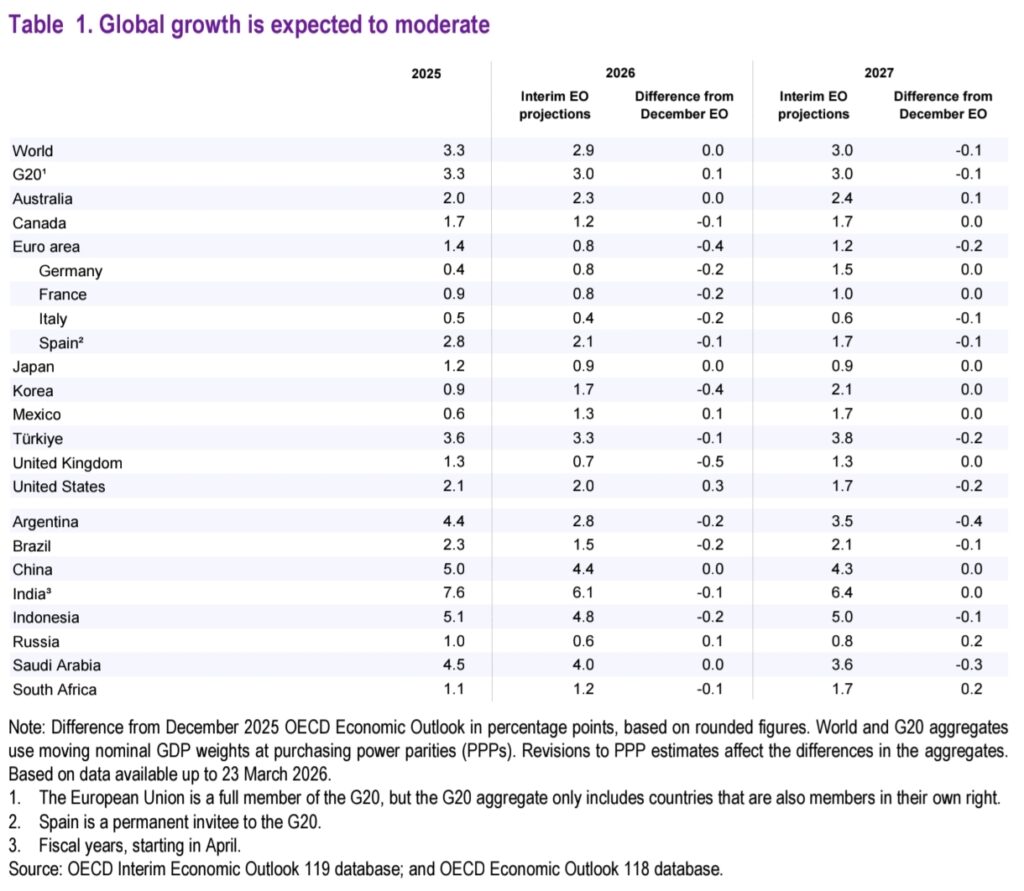
The Organisation for Economic Co-operation and Development (OECD) projected global GDP growth to slow to 2.9% in 2026 before slightly improving to 3.0% in 2027. The update reflects rising geopolitical tensions, particularly in the Middle East, which have disrupted energy markets and pushed commodity prices higher.
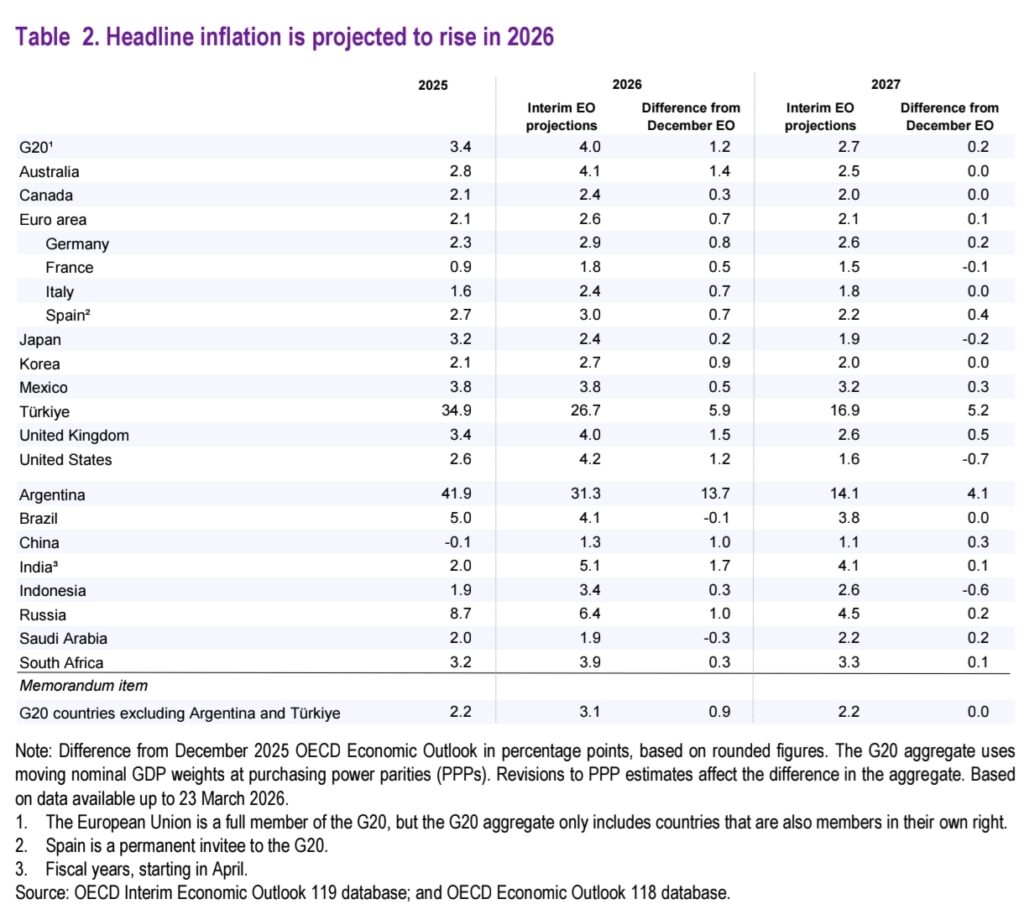
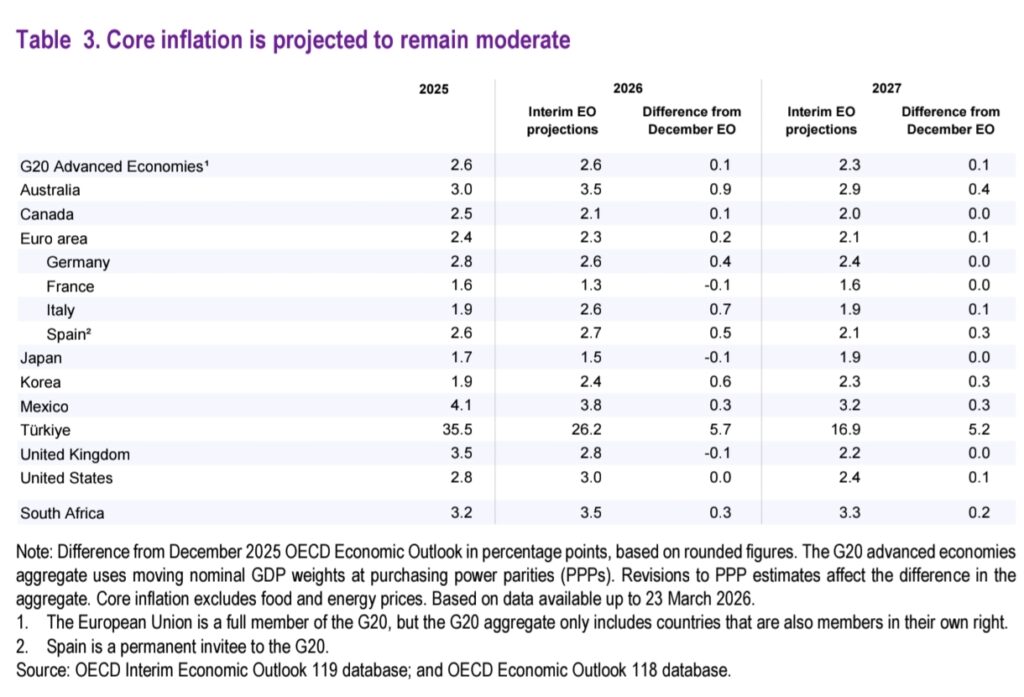
G20 inflation is now expected at 4.0% in 2026, up by 1.2 percentage points from earlier estimates, before easing to 2.7% in 2027. Major economies such as the United States, China, and India are expected to see moderated growth trajectories amid tightening financial conditions.
| Indicator | 2026 Forecast | 2027 Forecast |
| Global Growth | 2.9% | 3.0% |
| G20 Inflation | 4.0% | 2.7% |
| US Growth | 2.0% | 1.7% |
| China Growth | 4.4% | 4.3% |
| India Growth | 6.1% | 6.4% |
Why Did Global Growth Slow Down
The primary driver behind the slowdown is a sharp rise in energy prices triggered by disruptions in the Strait of Hormuz, a critical oil transit route handling nearly 20% of global petroleum flows. Supply shocks have increased input costs for industries and reduced disposable income for consumers.
Financial conditions have tightened across both advanced and emerging markets, with volatility increasing in Asian economies. Although the US Supreme Court ruling reduced certain tariff rates under the International Emergency Economic Powers Act, the effective tariff levels remain elevated compared to pre-2025 levels.
| Key Drivers | Impact |
| Energy Price Surge | Higher inflation, reduced consumption |
| Supply Chain Disruptions | Commodity shortages, cost pressures |
| Financial Tightening | Lower investment and liquidity |
| Geopolitical Conflict | Trade and energy uncertainty |
Bigger Context in Economy and Geopolitics
The current outlook reflects a fragile balance between technological optimism and geopolitical risk. While artificial intelligence investments have supported industrial production and productivity gains, their benefits are being offset by external shocks in energy and trade.
The Middle East conflict has added pressure on global supply chains, particularly for oil, gas, and fertilisers. Countries reliant on energy imports, including India and several European nations, face higher fiscal burdens due to subsidy pressures and import bills.
At the same time, global trade remains structurally uncertain. Although tariff reductions have eased some pressures, strategic decoupling and export restrictions continue to weigh on long-term trade efficiency.
| Region | Key Risk | Economic Effect |
| Middle East | Energy disruptions | Oil price volatility |
| Europe | Energy dependence | Lower industrial output |
| Asia | Market volatility | Capital flow fluctuations |
| US | Consumption slowdown | Growth moderation |
Impact on Markets, Companies, and Economy
Equity markets are likely to remain volatile, especially in energy-intensive sectors such as manufacturing, aviation, and chemicals. Rising fuel costs could compress margins for companies while boosting profitability for oil and gas producers.
Central banks, including the US Federal Reserve and the Reserve Bank of India (RBI), are expected to remain cautious. Persistent inflation risks may delay rate cuts, affecting borrowing costs for businesses and households.
Emerging markets face dual pressure from capital outflows and currency depreciation as global investors shift towards safer assets. Meanwhile, sectors linked to artificial intelligence and digital infrastructure may continue to attract capital due to long-term growth prospects.
What Happens Next
The trajectory of global growth will largely depend on energy market stability and geopolitical developments. If disruptions in the Middle East ease by mid-2026, inflationary pressures could moderate, allowing central banks to gradually normalize monetary policy.
However, prolonged conflict or further escalation could push oil prices significantly higher, potentially driving global inflation above 5% and reducing growth below 2.5%. Governments are expected to focus on targeted fiscal support while maintaining debt sustainability.
Investment in energy efficiency and diversification away from fossil fuels will become a strategic priority for major economies aiming to reduce exposure to future shocks.
Frequently Asked Questions
What is the OECD’s global growth forecast for 2026?
Global GDP growth is projected at 2.9% in 2026.
Why is inflation rising globally?
Higher energy prices and supply disruptions are pushing inflation to 4.0% in G20 economies.
Which countries are most affected?
Energy-importing economies like India and Europe, along with inflation-sensitive markets such as the US and UK.
What are the key risks to the outlook?
Extended Middle East conflict, higher oil prices, and financial market instability.
Conclusion
The OECD outlook highlights a global economy navigating between structural transformation and geopolitical disruption. While technology-led growth offers long-term upside, near-term risks from energy shocks and inflation remain dominant. Policy coordination, energy diversification, and stable financial conditions will be critical in shaping the next phase of global economic recovery.

BBW News Desk is the editorial team of BigBreakingWire, a digital newsroom focused on global finance, markets, geopolitics, trade policy, and macroeconomic developments.
Our editors monitor government decisions, central bank actions, international trade movements, corporate activity, and economic indicators to deliver fast, fact-based reporting for investors, professionals, and informed readers.
The BBW News Desk operates under the editorial standards of BigBreakingWire, prioritizing accuracy, verified information, and timely updates on major global developments.












Be First to Comment