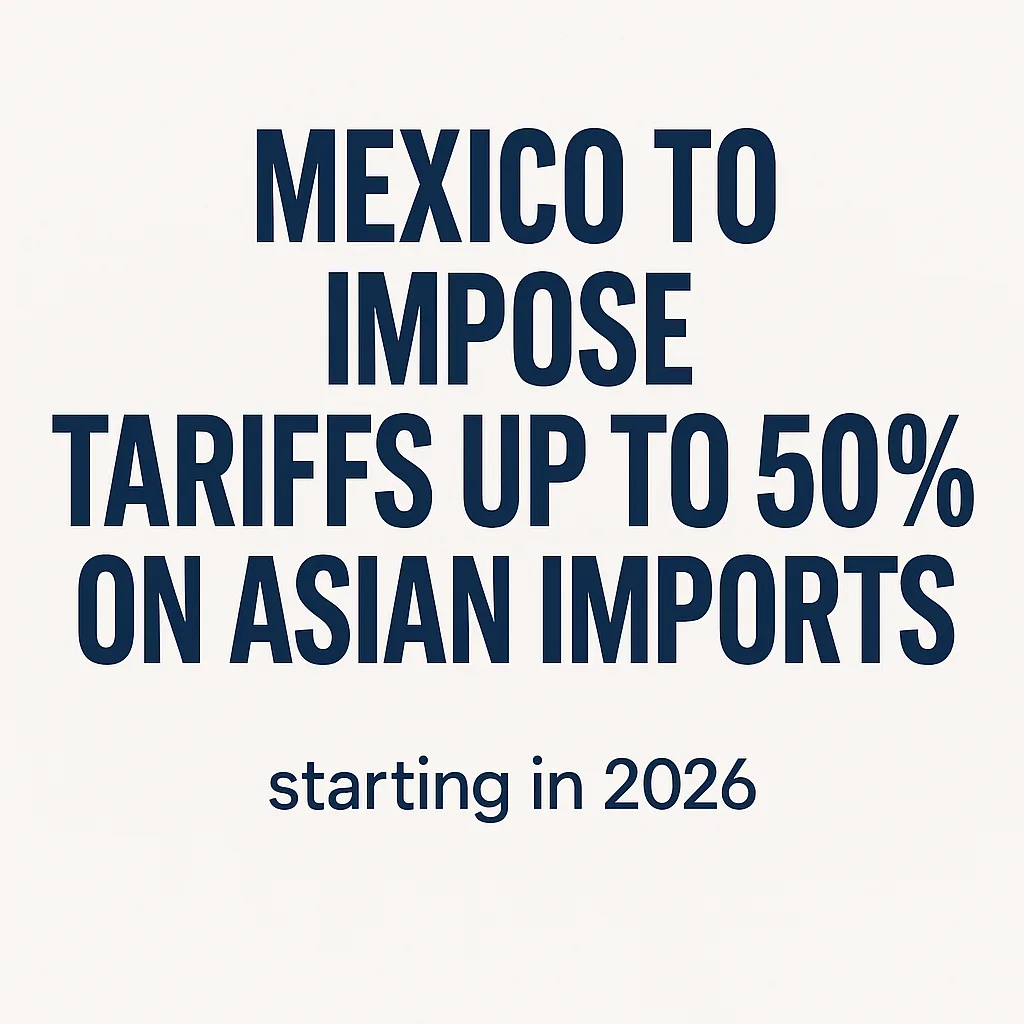
Mexico has approved steep new import tariffs of up to 50% on goods coming from China, India, South Korea, Thailand and Indonesia. The new duties will start on January 1, 2026 and apply to more than 1,400 products. The move aims to protect Mexico’s local industries and align its trade strategy more closely with the United States.
Why Mexico Is Increasing Tariffs
The Mexican Senate passed the tariff bill with a wide majority. The government says the higher duties will support domestic manufacturers, raise government revenue and reduce the flow of cheap Asian goods into the country.
According to Mexico’s finance ministry, the new tariffs are expected to generate 52 billion pesos (about $2.8 billion) in 2026.
Key Sectors Impacted
The tariffs will range from 5% to 50% and target sectors such as:
- Clothing and textiles
- Steel, metals and machinery
- Automobiles and auto components
- Electronics and industrial supplies
Chinese cars will face the highest 50% tariff. China currently holds nearly 20% of Mexico’s auto market, a sharp rise from almost zero six years ago.
What This Means for India
India does not have a Free Trade Agreement (FTA) with Mexico, so the new duties will apply fully to Indian exports. This is a major concern because Mexico had already raised tariffs on several products in April 2024.
Indian exporters warn that the latest hike may have a significant impact on:
- Automobiles and auto components
- Engineering goods
- Steel and metal products
- Ready-made garments
- Chemicals, electronics and plastics
India’s exports to Mexico in FY25 stood at $5.75 billion, led by engineering goods worth $3.53 billion, followed by electronics, chemicals, pharmaceuticals, garments, plastics, spices, leather goods and gems & jewellery.
Industry groups, including EEPC India, are urging the government to begin FTA negotiations with Mexico to reduce tariff pressure. However, officials say Mexico is currently not ready to engage in trade talks.
Link to US Trade Policy
The timing of Mexico’s decision is important. President Claudia Sheinbaum is currently engaged in sensitive trade discussions with US President Donald Trump. By increasing tariffs on Asian imports, Mexico appears to be aligning itself more closely with US trade policy.
US officials and businesses have long raised concerns that cheap Chinese goods enter the US through Mexico. Canada recently took similar steps. Although Sheinbaum denies direct coordination with Washington, the decision clearly strengthens Mexico’s position ahead of the 2026 USMCA review.
Will the Tariffs Increase Costs for Mexican Industry?
Critics warn that import-dependent manufacturers may face higher production costs and inflation. Many industries rely on Asian inputs for machinery, electronics, chemicals and auto parts.
However, the government argues that stronger local industries and higher fiscal revenues outweigh short-term challenges.
Direct Answers
Why is Mexico raising import tariffs?
To protect domestic industries, generate more revenue, reduce dependence on Asian imports and align its trade stance with the US.
Which countries are affected by Mexico’s new tariffs?
China, India, South Korea, Thailand and Indonesia — all nations without a free trade agreement with Mexico.
Which products face up to 50% tariffs?
Automobiles (especially Chinese cars), auto parts, steel, metals, machinery, textiles, electronics and various industrial goods.
How will Indian exporters be affected?
Indian exports in sectors like engineering goods, autos, steel and electronics could face major losses due to higher duties.
Is India planning an FTA with Mexico?
Industry groups have requested an FTA, but Mexico has not yet agreed to start formal talks.
Conclusion
Mexico’s tariff hike marks a major shift in global trade dynamics. While it strengthens its position with the US and protects domestic industries, it will likely increase costs for importers and challenge exporters from India, China and other Asian economies. For India, the move adds urgency to exploring new trade agreements and diversifying export markets.
India–Mexico Tariff Talks Ongoing
India is in discussions with Mexico after the country unilaterally raised tariffs on several products. An Indian official said New Delhi is working to find mutually beneficial solutions while keeping the option open to take appropriate steps to protect the interests of Indian exporters.
The higher duties apply to countries that do not have a free trade agreement with Mexico, including India, China, South Korea, Thailand, and Indonesia. The official added that India had been engaging with Mexico since the early stages, when the tariff-related bill was first introduced.

BBW News Desk is the editorial team of BigBreakingWire, a digital newsroom focused on global finance, markets, geopolitics, trade policy, and macroeconomic developments.
Our editors monitor government decisions, central bank actions, international trade movements, corporate activity, and economic indicators to deliver fast, fact-based reporting for investors, professionals, and informed readers.
The BBW News Desk operates under the editorial standards of BigBreakingWire, prioritizing accuracy, verified information, and timely updates on major global developments.














Be First to Comment