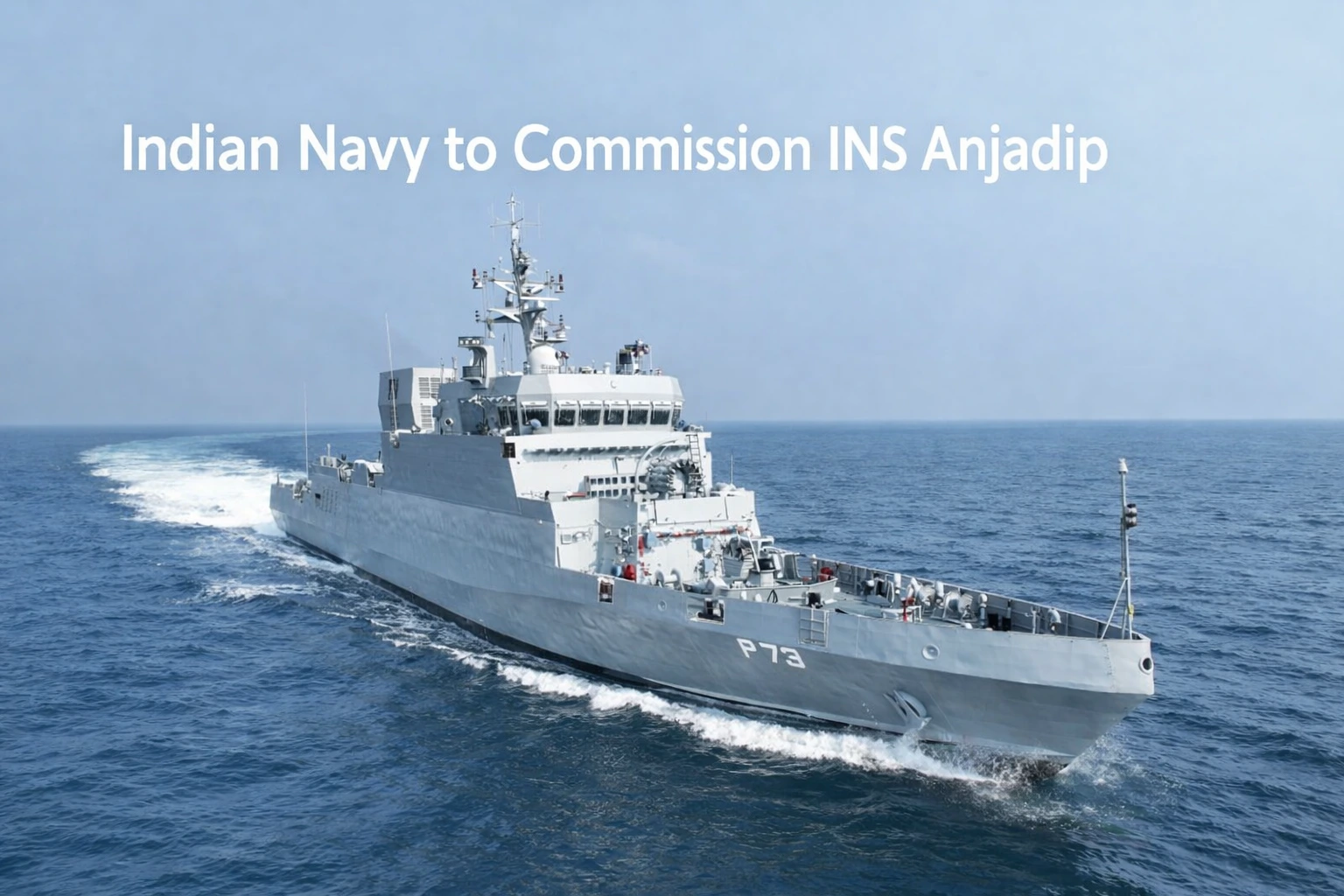
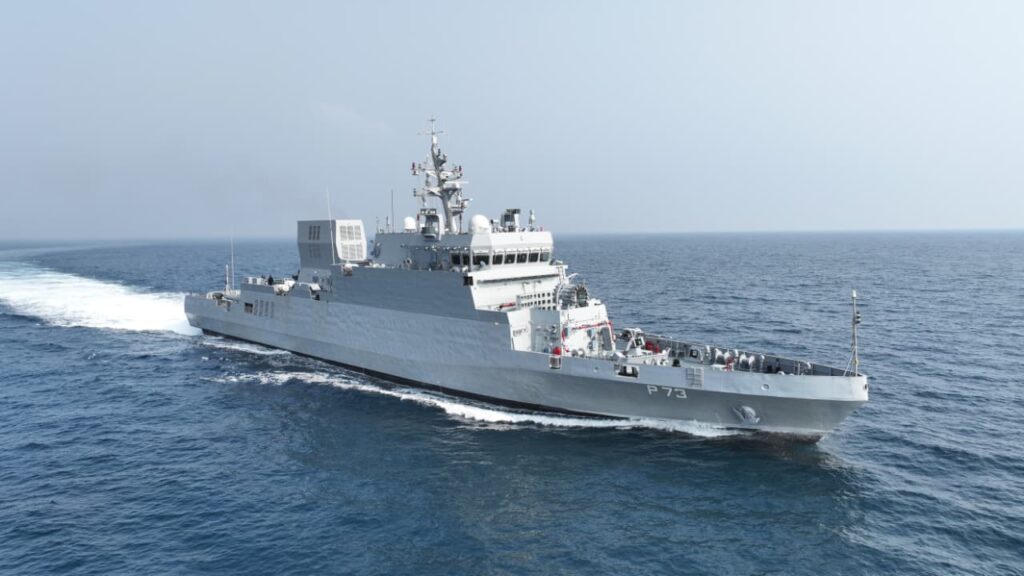
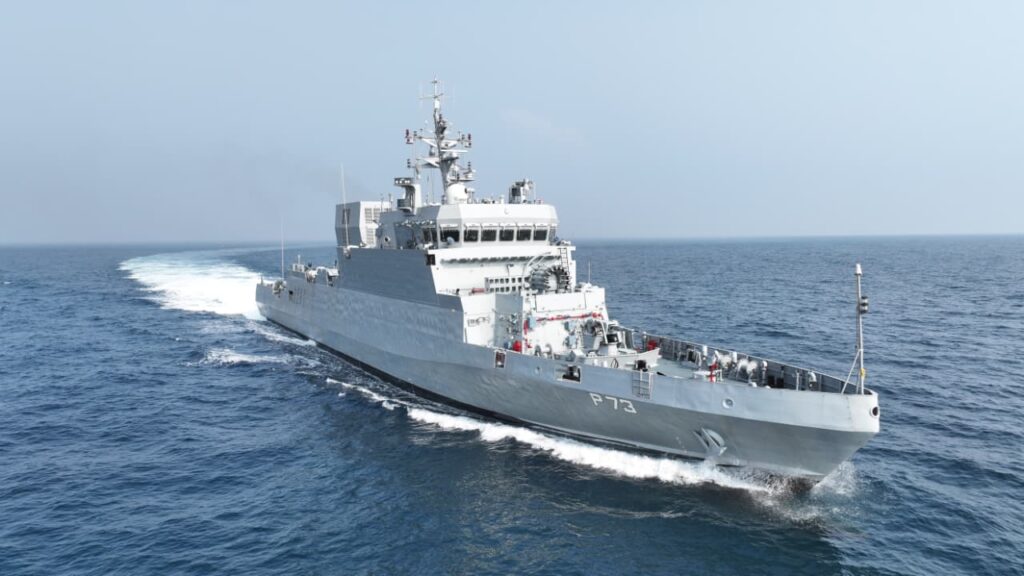
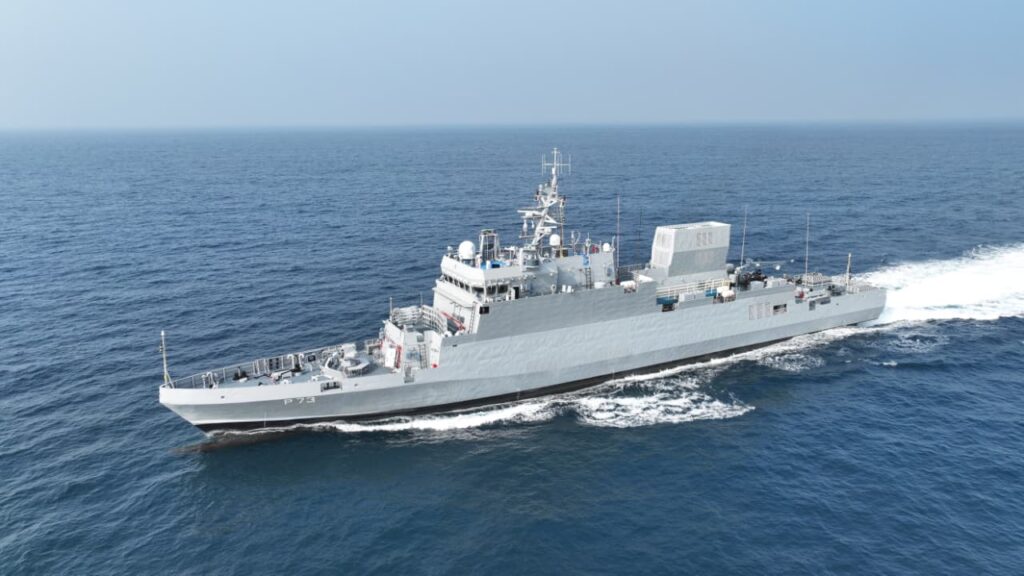
India will commission INS Anjadip, the third Anti-Submarine Warfare Shallow Water Craft (ASW-SWC), on 27 February 2026 at Chennai under the Eastern Naval Command. The 77-meter warship, built by Garden Reach Shipbuilders & Engineers (GRSE), is equipped with indigenous sonar, lightweight torpedoes, and ASW rockets. The induction strengthens coastal defence, particularly across Tamil Nadu and Puducherry maritime zones. The move aligns with India’s Aatmanirbhar Bharat defence policy and rising maritime security priorities in the Indo-Pacific.
What Happened in the Commissioning of INS Anjadip
The Indian Navy announced the formal commissioning of Anjadip, the third vessel in the eight-ship ASW-SWC project, scheduled for 27 February 2026 at Chennai Port. The ceremony will be presided over by Chief of Naval Staff Admiral Dinesh K Tripathi, marking a key addition to the Navy’s shallow-water anti-submarine fleet.
Constructed by Garden Reach Shipbuilders & Engineers (GRSE), Kolkata, the vessel features the indigenous Hull Mounted Sonar Abhay, lightweight torpedoes, and ASW rocket systems. With a top speed of 25 knots and water-jet propulsion, the platform is designed for rapid coastal response and submarine detection in littoral environments.
| Key Parameter | Details |
| Ship Name | INS Anjadip |
| Project | ASW Shallow Water Craft (8-ship program) |
| Builder | GRSE, Kolkata |
| Length | 77 meters |
| Top Speed | 25 knots |
| Primary Role | Anti-Submarine Warfare in coastal waters |
Why Did the ASW-SWC Induction Happen
The commissioning reflects India’s strategic focus on countering submarine threats in shallow coastal zones, where traditional large destroyers and frigates face operational limitations. With increased submarine deployments in the Indian Ocean Region (IOR), especially by regional powers, coastal ASW capabilities have become a priority for maritime deterrence.
Policy-wise, the project is part of India’s indigenous defence manufacturing push under Aatmanirbhar Bharat, reducing dependence on foreign naval platforms. Domestic shipbuilding programs also support defence capex efficiency as India’s defence budget crossed Rs 6 lakh crore in FY2025, with rising allocations toward naval modernization.
Bigger Context Behind India’s Naval Modernization in Economy and Geopolitics
The induction comes amid intensifying Indo-Pacific competition and expanding Chinese naval presence in the Indian Ocean. Over the past decade, China’s submarine patrols and port access agreements in the region have pushed India to strengthen coastal surveillance and anti-submarine networks.
Historically, India’s naval doctrine has shifted from blue-water expansion to layered maritime defence, including littoral security and chokepoint monitoring near key trade routes such as the Malacca Strait and Arabian Sea corridors. Nearly 95% of India’s trade by volume moves via sea, making coastal security a direct economic priority.
From a policy standpoint, indigenous naval construction through GRSE and other public shipyards supports India’s defence industrial base, improves domestic value addition, and aligns with long-term strategic autonomy goals in defence procurement.
How INS Anjadip Affects Markets, Companies, Investors, and Economy
The commissioning is a positive structural signal for India’s defence manufacturing sector, particularly for shipbuilders like GRSE, Mazagon Dock Shipbuilders, and Cochin Shipyard, which benefit from rising naval orders and long-term government contracts.
| Sector | Impact | Market Relevance |
| Defence Shipbuilding | Higher order visibility | Supports PSU defence stocks |
| Electronics & Sensors | Demand for indigenous sonar and systems | Boosts domestic defence supply chain |
| Capital Expenditure | Increased defence spending | Long-term fiscal allocation stability |
For investors, continued naval commissioning indicates sustained defence capex, which has grown at a CAGR of over 8% in recent budgets. This trend supports long-duration revenue pipelines for defence PSUs and private defence contractors.
On the macroeconomic front, localized defence manufacturing reduces import bills, supports skilled employment, and improves India’s defence export positioning, which crossed $2.6 billion in FY2025.
What Happens Next in India’s ASW and Naval Policy
The remaining vessels in the eight-ship ASW-SWC project are expected to be inducted in phases through 2027, strengthening India’s layered maritime defence architecture. The Navy is also focusing on unmanned underwater systems and next-generation sonar integration for enhanced submarine tracking.
| Upcoming Focus Area | Expected Development |
| ASW Fleet Expansion | Completion of 8-ship ASW-SWC program |
| Indigenous Defence Policy | Higher local manufacturing share |
| Indo-Pacific Strategy | Enhanced coastal and chokepoint surveillance |
Geopolitically, India’s naval strengthening signals a long-term commitment to securing sea lanes and countering underwater threats in the Indo-Pacific. This aligns with broader maritime cooperation frameworks involving Quad partners and regional security initiatives.
Frequently Asked Questions
What is INS Anjadip?
INS Anjadip is the third Anti-Submarine Warfare Shallow Water Craft built by GRSE for the Indian Navy to detect and neutralize submarines in coastal waters.
When will INS Anjadip be commissioned?
The warship will be commissioned on 27 February 2026 at Chennai under the Eastern Naval Command.
Why is ASW capability important for India?
ASW capability protects coastal regions and critical sea trade routes from submarine threats, especially in the Indian Ocean Region.
How does this support Aatmanirbhar Bharat?
The vessel is indigenously designed and built, strengthening domestic defence manufacturing and reducing reliance on foreign imports.
Conclusion
The commissioning of INS Anjadip marks a strategic step in India’s naval modernization and coastal defence capability expansion. With rising submarine activity in the Indo-Pacific and increasing maritime trade dependence, indigenous ASW platforms will remain central to defence policy, capital allocation, and long-term geopolitical positioning. Continued naval inductions are likely to support defence sector growth, policy stability, and India’s broader maritime security strategy in the coming decade.

BBW News Desk is the editorial team of BigBreakingWire, a digital newsroom focused on global finance, markets, geopolitics, trade policy, and macroeconomic developments.
Our editors monitor government decisions, central bank actions, international trade movements, corporate activity, and economic indicators to deliver fast, fact-based reporting for investors, professionals, and informed readers.
The BBW News Desk operates under the editorial standards of BigBreakingWire, prioritizing accuracy, verified information, and timely updates on major global developments.









Be First to Comment