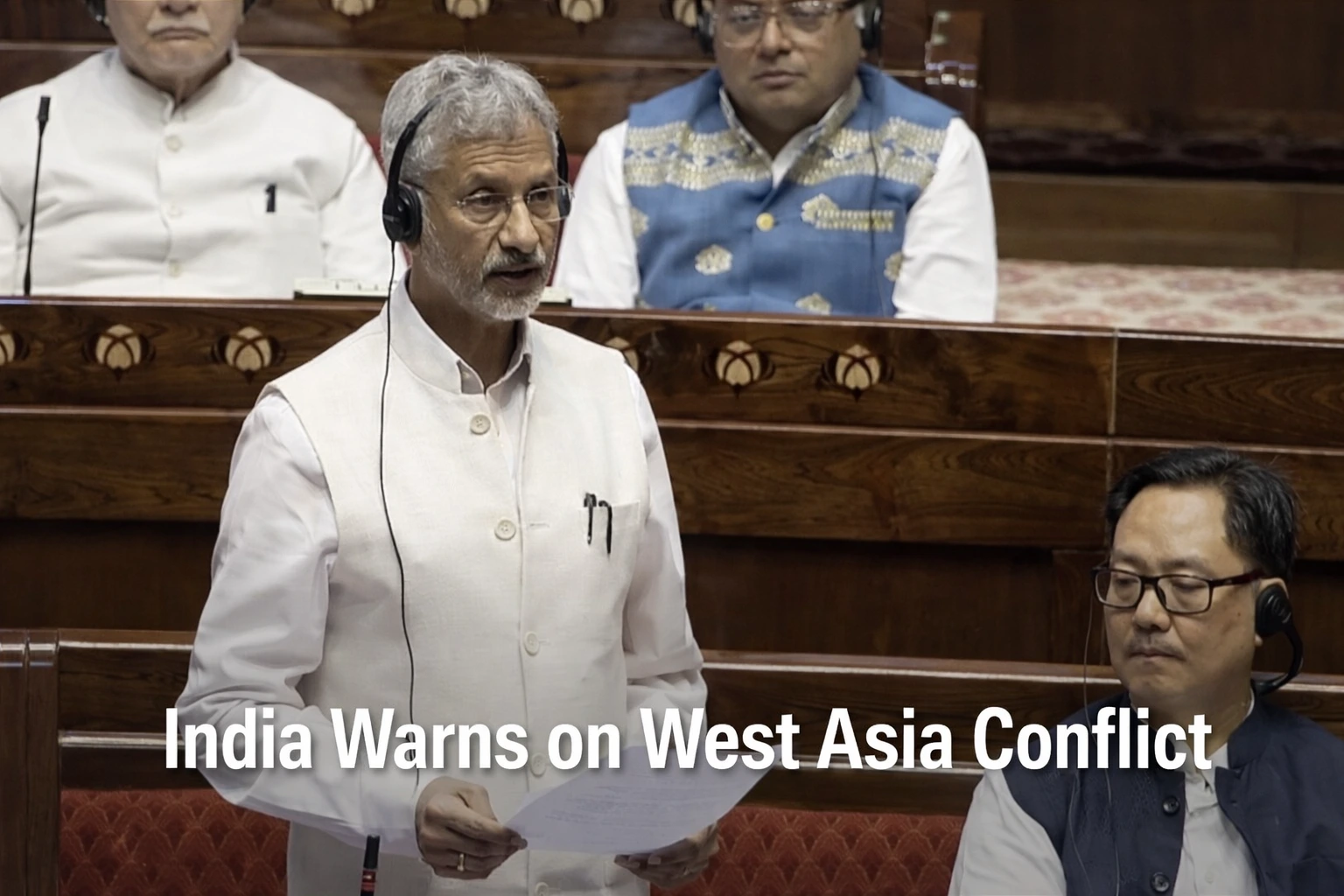
India’s External Affairs Minister Dr. S. Jaishankar on March 09, 2026 briefed Parliament on the rapidly escalating conflict in West Asia involving Israel, the United States, Iran, and several Gulf nations. The conflict, which began on February 28, has already disrupted regional security, threatened global energy supplies, and affected thousands of Indian nationals working across the Gulf.
The Indian government confirmed that nearly 67,000 Indians have returned home as airspace disruptions and security concerns intensified across the region. West Asia is critical for India’s economy, supplying a large share of its oil and gas imports and accounting for roughly $200 billion in annual trade.
Officials also warned that attacks on shipping, disruptions in aviation routes, and instability in the Strait of Hormuz could impact global oil markets, supply chains, and India’s energy security.
What Happened in the West Asia Conflict
The latest round of hostilities began on February 28, 2026 when military strikes escalated between Israel and the United States on one side and Iran on the other. The conflict soon spread beyond these countries, with attacks reported in several Gulf states.
Indian officials confirmed that the fighting has caused casualties at senior leadership levels in Iran and damaged infrastructure across the region. Shipping routes, aviation corridors, and commercial activities have also been severely affected.
The Indian government immediately issued a statement urging restraint and diplomatic dialogue. The Cabinet Committee on Security, chaired by Prime Minister Narendra Modi, met on March 01 to review the security situation and assess risks for Indian citizens and businesses.
| Key Event | Details |
| Conflict Start Date | February 28, 2026 |
| Main Parties | United States, Israel, Iran, Gulf States |
| Indian Nationals Evacuated | Approximately 67,000 |
| Annual India-Gulf Trade | About $200 billion |
| Indian Community in Gulf | Nearly 1 crore people |
Why Did the West Asia Conflict Escalate
The escalation reflects growing geopolitical tensions that have been building since the 12-day war in June 2025 between Iran and Israel. Strategic competition over regional influence, missile programs, and nuclear concerns have increased friction between Tehran and Western allies.
Recent airstrikes inside Iran and retaliatory attacks across Gulf countries pushed the region into a broader conflict zone. Gulf states hosting major oil infrastructure and military facilities have become vulnerable targets.
The situation has also been shaped by competing security alliances in the region. The United States maintains a large military presence in the Gulf, while Iran has expanded its regional network of partners and proxy groups.
Bigger Context Behind the West Asia Crisis in Global Economy and Geopolitics
West Asia plays a central role in the global energy system. The region controls some of the world’s largest oil and natural gas reserves, and the Strait of Hormuz handles nearly 20% of global oil shipments.
Any disruption to shipping routes or oil production in this region can quickly move global energy prices. Oil traders and shipping companies are already adjusting routes and insurance premiums as security risks increase.
For India, the Gulf region is strategically important beyond energy. It hosts millions of Indian workers who send billions of dollars in annual remittances. In addition, countries like the UAE and Saudi Arabia have become major investors in Indian infrastructure, logistics, and technology sectors.
| Economic Link | Impact on India |
| Oil Imports | Major share sourced from Gulf region |
| Trade Volume | Approximately $200 billion annually |
| Indian Workforce | Nearly 10 million Indians in Gulf countries |
| Remittances | Billions of dollars sent to India each year |
How the Conflict Affects Markets, Companies, Investors, and Economy
Financial markets are closely monitoring developments in West Asia because energy prices are highly sensitive to geopolitical risk. Oil benchmarks such as Brent crude have already experienced sharp volatility as traders assess the possibility of supply disruptions.
If shipping through the Strait of Hormuz becomes restricted, global oil prices could remain above $100 per barrel for an extended period. Higher crude prices typically raise inflation risks for large importers such as India.
Indian sectors most exposed to oil price shocks include aviation, logistics, petrochemicals, and transportation. Rising fuel costs could also widen India’s current account deficit and increase pressure on the rupee.
Shipping companies and global insurers are also reassessing risk exposure. Attacks on merchant vessels have already resulted in casualties among international crews, including Indian mariners.
| Sector | Potential Impact |
| Energy Markets | Possible oil price surge if supply routes are disrupted |
| Aviation | Higher fuel costs and airspace rerouting |
| Shipping | Increased insurance premiums and route risks |
| Indian Economy | Inflation pressure and current account risk |
What Happens Next in the West Asia Conflict
Diplomatic engagement is expected to intensify as global powers attempt to prevent a wider regional war. India has maintained close communication with Gulf leaders, Israel, and the United States while continuing limited diplomatic contact with Iran.
The Indian government is also focusing on evacuation logistics, maritime safety, and supply chain continuity. Authorities have already coordinated special flights and cross-border transport routes to bring Indian nationals back home.
Energy security planning will remain a major priority. India may increase crude purchases from alternative suppliers or rely on strategic petroleum reserves if global supply disruptions deepen.
Frequently Asked Questions
What triggered the current West Asia conflict?
The conflict escalated on February 28, 2026 after military strikes between Israel, the United States, and Iran expanded into attacks across several Gulf states.
Why is the West Asia crisis important for India?
The region supplies a large portion of India’s oil and hosts nearly one crore Indian workers, making stability crucial for energy security and remittances.
How many Indians have returned from the region?
According to government data, around 67,000 Indian nationals have returned home amid disruptions to flights and regional security concerns.
Could the conflict raise global oil prices?
Yes. If shipping routes like the Strait of Hormuz are disrupted, oil prices could remain elevated and impact global inflation and energy costs.
Conclusion
The growing conflict in West Asia highlights the deep connection between geopolitics and global energy markets. For India, the stakes extend beyond diplomacy to include energy imports, trade flows, and the safety of millions of citizens living abroad.
While diplomatic efforts continue, markets will closely watch developments in oil supply routes, shipping security, and military escalation. The trajectory of this conflict could shape global energy prices, trade stability, and geopolitical alignments in the months ahead.

BBW News Desk is the editorial team of BigBreakingWire, a digital newsroom focused on global finance, markets, geopolitics, trade policy, and macroeconomic developments.
Our editors monitor government decisions, central bank actions, international trade movements, corporate activity, and economic indicators to deliver fast, fact-based reporting for investors, professionals, and informed readers.
The BBW News Desk operates under the editorial standards of BigBreakingWire, prioritizing accuracy, verified information, and timely updates on major global developments.





Be First to Comment