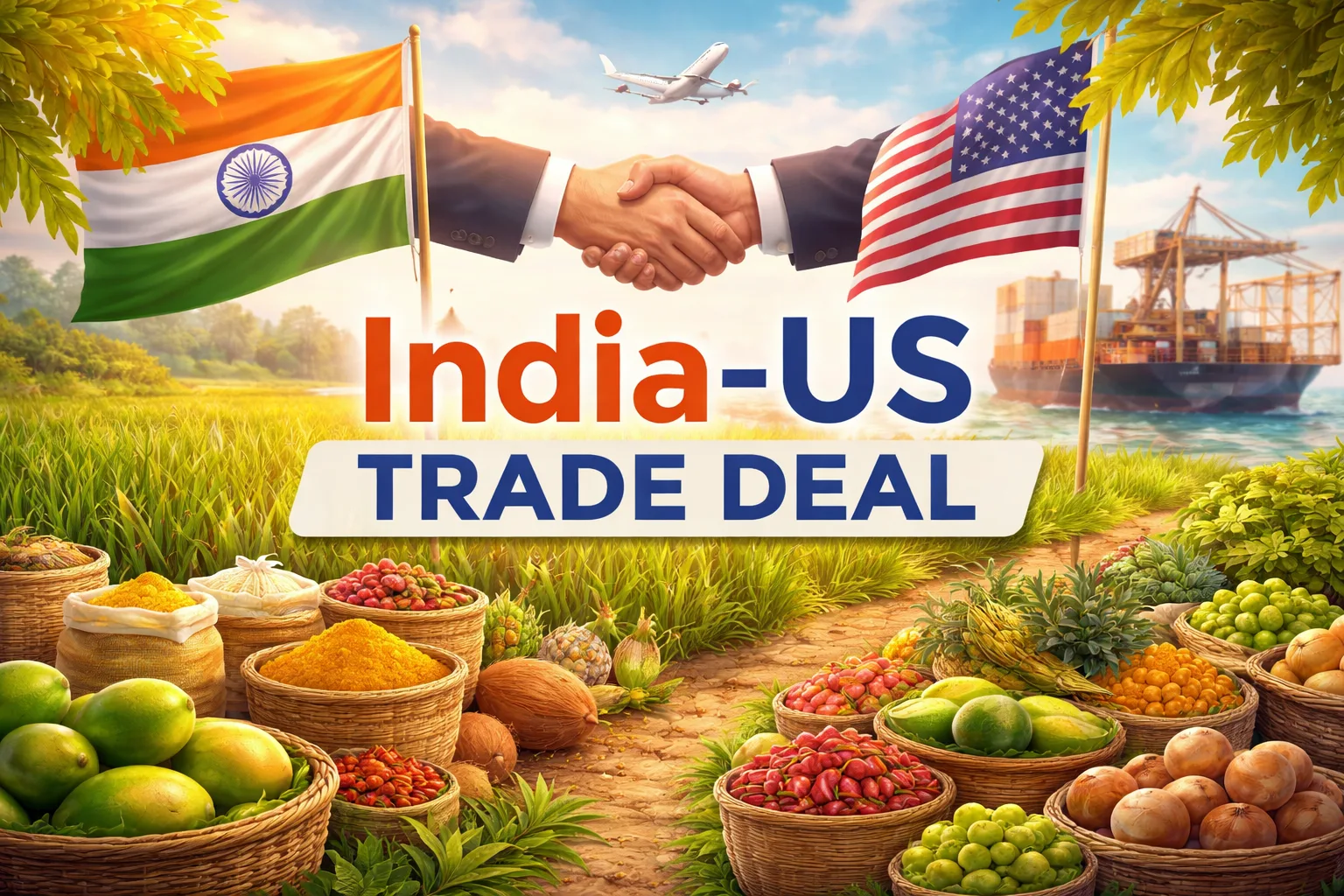
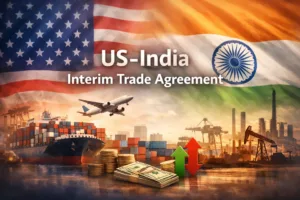
India and the United States have signed a major trade agreement that the government calls historic. The deal gives many Indian agricultural products zero tariff access to the US market while protecting sensitive Indian farm sectors. Leaders say this will raise exports, support farmers, and create new business opportunities. The agreement is also seen as a step toward stronger global economic ties and long term growth for India.
What Happened
India and the US finalized a trade deal covering agriculture, textiles, and several manufacturing related sectors. Indian officials said many Indian farm goods can now enter the US without import tariffs.
The government made it clear that no product harmful to Indian farmers has been opened for easy entry from the US. Major grains and dairy products remain protected.
Earlier US tariffs of up to 50% on some Indian agricultural items have been reduced to 0% under this deal, according to the minister. This is expected to make Indian goods more competitive in the US market.
Why Did It Happen
India wants to grow exports, increase rural incomes, and strengthen its position in global trade. Agriculture supports a large population, so better export access can directly help farmers.
The government is also promoting self reliance and the goal of becoming a developed nation. Trade deals are seen as tools to connect Indian producers with large global markets.
This agreement shows India’s approach of expanding trade while still protecting sensitive domestic sectors.
What Is the Bigger Context or Concern
Farm trade is always a sensitive issue in India. Farmers worry that cheap imports could reduce local prices of crops like rice, wheat, and dairy products.
The minister said items such as soybean, corn, rice, wheat, sugar, poultry, dairy, and several fruits and pulses are not given tariff concessions. This is meant to ensure domestic farmers remain safe.
India has been signing more trade agreements in recent years as part of a broader plan to become a reliable global manufacturing and supply chain partner.
How Does This Affect Markets, Companies, or People
Farmers producing spices, tea, coffee, fruits, coconut products, and processed farm goods could benefit from zero tariff access to the US. Lower tariffs can improve prices and profit margins.
Spice exporters may gain strongly, as India already exports spices to nearly 200 places worldwide. The US market could add more demand.
Textiles, gems and jewellery, auto components, engineering goods, and MSMEs are also expected to benefit. Higher textile exports can support cotton farmers.
Women working in self help groups and small rural businesses may also see more opportunities as export demand grows.
What Happens Next
Implementation details will be important. Exporters must follow US quality and safety standards.
Better logistics, storage, and certification systems will be needed as export volumes increase. Companies that invest early in quality and branding may benefit more.
Markets will watch export numbers and sector performance to see how strongly the deal improves incomes and business growth.
Frequently Asked Questions
Do US farm products get zero tariff entry into India?
No. Sensitive items like major grains, dairy, poultry, and several fruits and pulses are not given tariff concessions.
Which Indian products benefit most?
Spices, tea, coffee, coconut products, some fruits, mushrooms, and certain farm based items are expected to gain.
How does this help farmers?
Better export access can increase demand and prices for crops, which can support farm income if supply chains work well.
Does this deal affect only agriculture?
No. Textiles, gems and jewellery, auto components, engineering goods, and MSMEs are also expected to benefit.
Conclusion
This India US trade deal aims to grow exports while protecting key farm sectors at home. If carried out smoothly, it could support farmers, boost manufacturing, and strengthen India’s role in the global economy.
India–New Zealand Conclude Landmark Free Trade Agreement
US Dollar Loses Ground as Gold Emerges as Key Global Reserve

BBW News Desk is the editorial team of BigBreakingWire, a digital newsroom focused on global finance, markets, geopolitics, trade policy, and macroeconomic developments.
Our editors monitor government decisions, central bank actions, international trade movements, corporate activity, and economic indicators to deliver fast, fact-based reporting for investors, professionals, and informed readers.
The BBW News Desk operates under the editorial standards of BigBreakingWire, prioritizing accuracy, verified information, and timely updates on major global developments.




















Be First to Comment