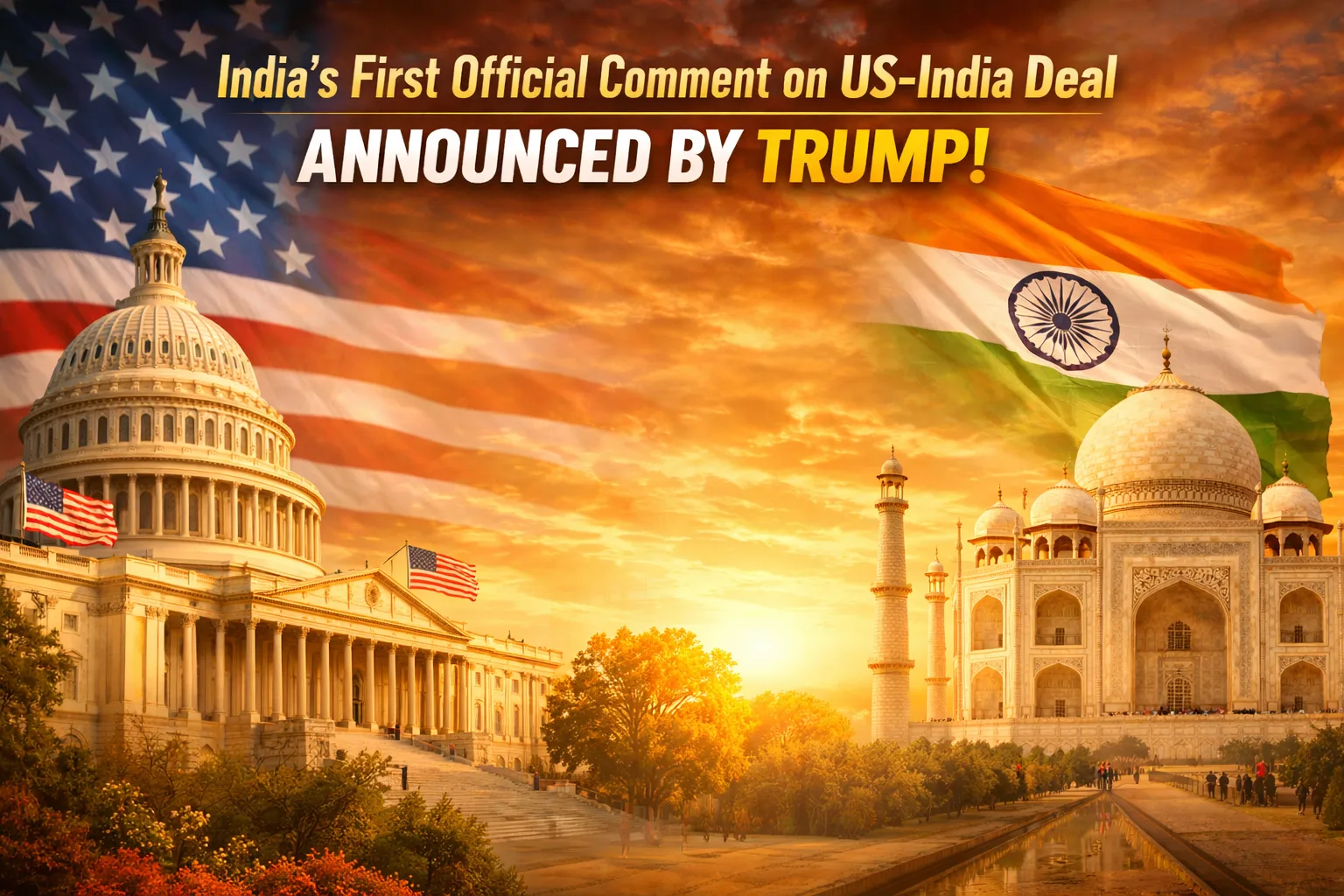
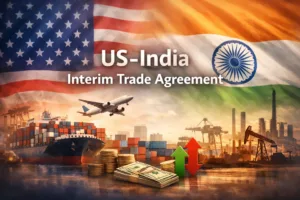
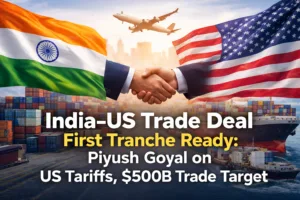
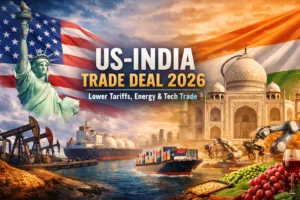
On February 3, 2026, Union Commerce and Industry Minister Piyush Goyal described the new India US trade deal as a historic turning point. He said the agreement will reshape bilateral relations and speed up India’s journey toward Viksit Bharat 2047.
Why is the India US Trade Deal Important?
This deal strengthens economic ties between the world’s largest democracy, India, and the world’s oldest democracy, the United States. According to Goyal, the two nations are natural allies working toward shared prosperity and long term strategic cooperation.
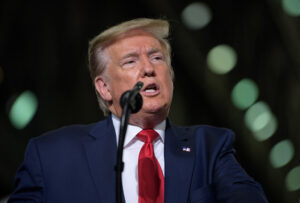
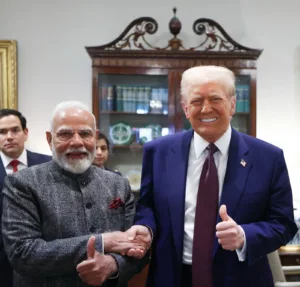
The agreement is seen as a major diplomatic and economic success after a high level discussion between Prime Minister Narendra Modi and US President Donald Trump.
What Tariff Changes Were Announced?
- US reciprocal tariffs on Indian goods reduced to 18%
- Earlier tariff levels were 25%, and in some cases reached 50% due to additional penalties
- The new tariff rate takes effect immediately
This provides instant relief to Indian exporters and improves price competitiveness of Indian goods in the US market.
How Much Market Access Did India Gain?
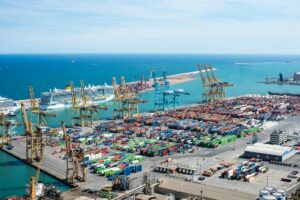
The deal provides market access for more than 99% of India’s exports by trade value. This is one of the broadest access arrangements India has secured in any trade partnership.
Which Sectors Benefit the Most?
1. MSMEs and Small Businesses
Micro, small, and medium enterprises will find it easier to sell products in the US market. Lower tariffs and fewer trade barriers improve export opportunities.
2. Labor Intensive Industries
- Textiles
- Gems and jewelry
- Leather goods
- Engineering products
- Marine products
These sectors are expected to see strong growth in orders and employment.
3. Technology Sector
The agreement supports the transfer of advanced technology from the US to India. This can help Indian industries upgrade manufacturing and improve innovation capacity.
Were Any Indian Sectors Protected?
Yes. The government has protected sensitive sectors such as:
- Agriculture
- Dairy
- Animal husbandry
Goyal assured that India’s domestic interests remain safeguarded.
What About Russian Oil and Trade Barriers?
Reports suggest the agreement followed India’s commitment to stop buying Russian oil linked to the Ukraine war. In exchange for tariff reductions, India agreed to lower certain trade barriers, which helped secure better terms in the deal.
Kremlin Says No Signal From India on Russian Oil
Russia says it has not received any official message from India about stopping purchases of Russian oil, dismissing the recent market talk. Officials indicated that, through formal channels, there has been no communication suggesting a change in current buying arrangements.
Responding to comments linked to Donald Trump, Moscow emphasized that its strategic partnership with India remains very important. This signals that energy cooperation between Russia and India is continuing as usual for now.
Meanwhile, Indian refiners have said they would need time to wind down existing Russian oil contracts and that they have not received any direction from the government to halt imports.
Is the Deal Fully Finalized?
The major breakthrough has been announced, but final details will be released after legal scrubbing. A joint statement from both countries is expected soon.
What Does This Mean for India’s Future?
This trade deal strengthens India’s global trade position, improves export competitiveness, supports MSMEs, and attracts advanced technology. It aligns with India’s long term economic vision of becoming a developed nation by 2047.
Quick Summary
- India US trade deal called a historic turning point
- US tariffs on Indian goods cut to 18%
- 99% of Indian exports gain market access
- Big boost for MSMEs and labor intensive sectors
- Technology transfer to India supported
- Agriculture and dairy sectors protected
US India Trade Deal Moves Forward After Talks
Office of the United States Trade Representative official Jamieson Greer said the trade deal announced with India came after detailed discussions between both sides. As part of the understanding, India has agreed to lower tariffs on several goods imported from the United States, which could improve market access for American exporters.
However, India will continue to keep some protection in place for its agricultural sector. This means certain farm related products may still face limits or higher duties, showing that sensitive domestic industries are being safeguarded.
Greer also said both countries have an understanding to reduce India’s technical non tariff trade barriers, including better recognition of U.S. standards. He added that the stakes in tariff related matters remain very high, highlighting how important these negotiations are for overall trade relations.

BBW News Desk is the editorial team of BigBreakingWire, a digital newsroom focused on global finance, markets, geopolitics, trade policy, and macroeconomic developments.
Our editors monitor government decisions, central bank actions, international trade movements, corporate activity, and economic indicators to deliver fast, fact-based reporting for investors, professionals, and informed readers.
The BBW News Desk operates under the editorial standards of BigBreakingWire, prioritizing accuracy, verified information, and timely updates on major global developments.















Be First to Comment