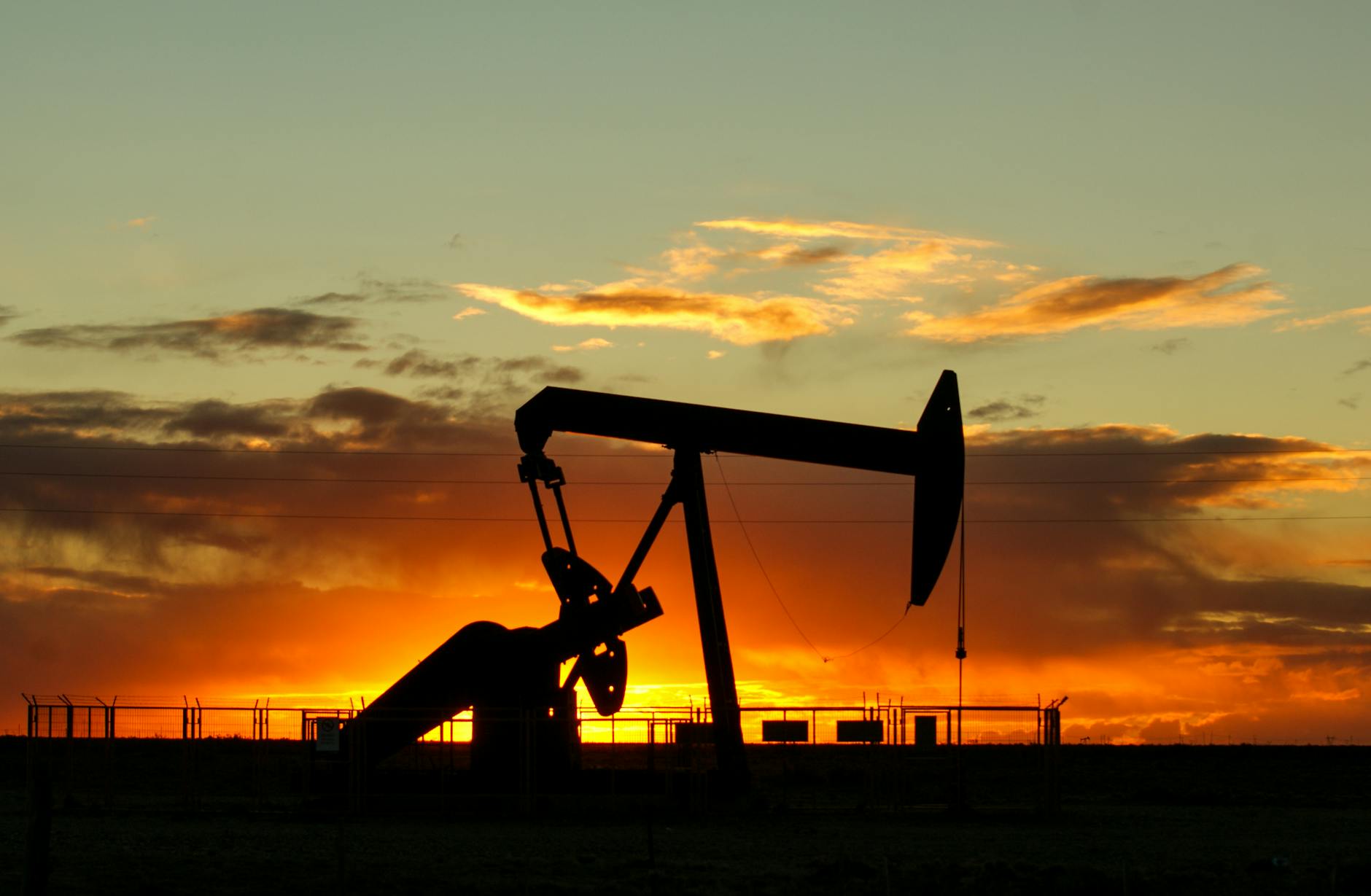
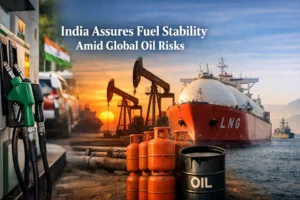
India has activated emergency energy and maritime monitoring systems as the West Asia conflict enters its 13th day and the Strait of Hormuz remains closed to commercial shipping. The government says Indian refineries are operating at high capacity utilization while more than 50 lakh LPG cylinders are being delivered daily across the country.
Officials confirmed that 70% of India’s crude imports are currently arriving through routes outside the Strait of Hormuz, reducing immediate supply disruption risks. Domestic LPG production has also increased by 28% after refineries were directed to maximize propane and butane output for cooking gas.
The coordinated response involves multiple ministries including Petroleum and Natural Gas, External Affairs, Shipping, and Information and Broadcasting. Authorities say the goal is to maintain fuel supply stability, protect Indian seafarers, and prevent panic buying of LPG during the ongoing geopolitical crisis.
What Happened in India’s Emergency Energy Response
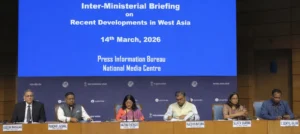
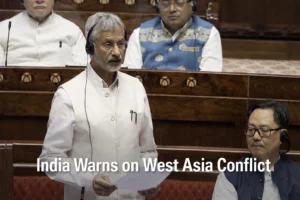
The Indian government conducted an inter ministerial briefing to address concerns about fuel supply and maritime safety as tensions escalate in West Asia. The closure of the Strait of Hormuz has disrupted a critical global energy route through which a large portion of the world’s oil and gas shipments normally pass.
Officials stated that India consumes about 5.5 million barrels of crude oil per day and operates 22 refineries, making it the fourth largest refining hub in the world. Several refineries are currently operating above 100% utilization to maintain stable fuel output.
The government also confirmed that retail fuel availability remains stable with nearly 1 lakh fuel stations operating normally across the country. LPG distribution networks with over 25,000 distributors continue to deliver cooking gas without reported shortages.
| Key Energy Indicators | Current Status |
| India Daily Crude Consumption | 5.5 million barrels |
| Total Refineries in India | 22 |
| Daily LPG Cylinder Deliveries | 50 lakh |
| LPG Production Increase | 28% |
| Retail Fuel Outlets | Approx 1 lakh |
Why the Energy Response Was Triggered
The primary trigger for India’s emergency energy coordination is the shutdown of commercial shipping through the Strait of Hormuz, one of the world’s most strategic maritime chokepoints. Nearly one fifth of global oil trade typically moves through this narrow waterway connecting the Persian Gulf with global markets.
India imports about 60% of its LPG consumption and nearly 90% of that supply traditionally travels through the Hormuz route. The disruption has forced the government to activate contingency supply channels and increase domestic refinery output.
Officials have also issued a Natural Gas Control Order under the Essential Commodities Act on 9 March 2026 to prioritize gas supply and ensure critical sectors such as power generation and fertilizer production receive adequate fuel.
Bigger Context Behind the West Asia Energy Shock
The West Asia conflict has created the most severe disruption to Gulf shipping routes in decades. For energy importing economies like India, the Strait of Hormuz represents a strategic vulnerability because many crude and gas shipments originate from the Gulf region.
Over the past decade India has attempted to diversify crude sources by increasing imports from countries including the United States, Russia, Brazil, and several African producers. The current crisis highlights why supply diversification has become a central pillar of India’s long term energy strategy.
Global oil prices have already reacted to the disruption with Brent crude approaching the $100 per barrel level and West Texas Intermediate trading above $90. Higher energy prices can increase inflation pressure in importing economies and widen trade deficits.
The conflict has also raised concerns about maritime security, insurance premiums for tanker shipments, and the potential for longer shipping routes that increase transportation costs.
| Energy Import Exposure | Share |
| India LPG Imports | 60% |
| LPG via Strait of Hormuz | 90% |
| Crude Supply from Non Hormuz Routes | 70% |
How the Crisis Affects Markets, Companies, Investors, and Economy
The immediate market impact of the crisis is visible in global oil prices and shipping costs. Energy stocks often benefit from higher crude prices, while airlines, transport companies, and fuel intensive industries face rising operating expenses.
For India, higher oil prices can put pressure on inflation, fiscal balances, and the current account deficit. Government fuel subsidy programs may also face renewed strain if crude prices remain elevated for an extended period.
However, India’s large refining capacity offers an advantage. Domestic refiners can adjust product output to meet demand for diesel, petrol, and LPG. This flexibility helps stabilize domestic supply even when global shipping routes face disruption.
The crisis is also pushing policymakers to accelerate alternative fuel options. Authorities have temporarily allowed industries and hospitality businesses to switch to kerosene, biomass pellets, coal, and fuel oil to reduce pressure on LPG supplies.
| Sector Impact | Effect |
| Oil and Gas Companies | Potential benefit from higher crude prices |
| Airlines and Transport | Higher fuel costs |
| Manufacturing | Possible energy cost inflation |
| Households | Risk of LPG supply pressure if imports tighten |
What Happens Next in India’s Energy Strategy
India is likely to continue expanding supply diversification while strengthening strategic petroleum reserves. Policymakers may also accelerate investments in renewable energy and domestic gas production to reduce long term dependence on imported fuels.
Shipping safety will remain a priority as Indian flagged vessels and nearly 800 seafarers in the Persian Gulf region continue to be monitored by maritime authorities. Ports across India have also been instructed to prioritize LPG vessel handling and facilitate emergency cargo logistics.
For financial markets, the duration of the West Asia conflict will be the key variable. If shipping disruptions continue for several weeks, global oil markets could tighten further, increasing inflation risks and influencing central bank policy decisions worldwide.
Frequently Asked Questions
Why is the Strait of Hormuz important for India?
The Strait of Hormuz is a critical shipping route for oil and gas exports from the Gulf. A large portion of India’s energy imports normally passes through this channel.
Is India facing a fuel shortage?
No. The government says refineries are operating at high capacity and fuel stations across the country have adequate stocks.
Why has LPG production increased by 28%?
Refineries were directed to maximize propane and butane output and prioritize LPG supply for domestic cooking gas distribution.
How many LPG cylinders are delivered daily in India?
Approximately 50 lakh LPG cylinders are delivered every day through India’s nationwide distribution network.
Conclusion
The West Asia conflict has exposed the fragility of global energy supply chains and the strategic importance of maritime chokepoints such as the Strait of Hormuz. India’s response highlights the value of diversified energy imports, strong domestic refining capacity, and coordinated government policy.
If the geopolitical crisis continues, energy markets and shipping routes may remain volatile. For India, the challenge will be managing inflation risks while maintaining stable fuel supplies for households, industries, and financial markets.

BBW News Desk is the editorial team of BigBreakingWire, a digital newsroom focused on global finance, markets, geopolitics, trade policy, and macroeconomic developments.
Our editors monitor government decisions, central bank actions, international trade movements, corporate activity, and economic indicators to deliver fast, fact-based reporting for investors, professionals, and informed readers.
The BBW News Desk operates under the editorial standards of BigBreakingWire, prioritizing accuracy, verified information, and timely updates on major global developments.




Be First to Comment