
India and the Gulf Cooperation Council (GCC) signed a Joint Statement on February 24, 2026, in New Delhi to formally launch negotiations for a comprehensive India-GCC Free Trade Agreement (FTA). The talks aim to deepen trade, investment, and economic integration between India and a bloc that accounts for 15.42% of India’s global trade. Bilateral trade between India and GCC countries reached $178.56 billion in FY 2024-25, with exports at $56.87 billion and imports at $121.68 billion. The agreement directly affects exporters, energy markets, investors, and companies engaged in trade with the Middle East.
What Happened in India–GCC Free Trade Agreement Negotiations
The Joint Statement was signed by Commerce and Industry Minister Piyush Goyal and GCC Secretary General Jasem Mohamed Albudaiwi, officially initiating negotiations for a broad-based trade pact. The move follows the signing of Terms of Reference (ToR) on February 5, 2026, which outlined the framework for structured trade discussions.
The proposed FTA is designed to create a predictable and rules-based trade environment, covering goods, services, investments, and economic cooperation. The GCC bloc includes Saudi Arabia, UAE, Qatar, Kuwait, Oman, and Bahrain, making it India’s largest trading partner bloc in aggregate terms.
| Key Metric | Data |
| Total India-GCC Trade (FY 2024-25) | $178.56 Billion |
| India’s Exports to GCC | $56.87 Billion |
| India’s Imports from GCC | $121.68 Billion |
| Share in India’s Global Trade | 15.42% |
| Average Trade Growth (5 Years) | 15.3% |
Why Did India–GCC FTA Talks Happen
The negotiations are driven by strategic economic diversification and supply chain security. India is seeking stable energy partnerships, export market expansion, and investment inflows, while GCC nations are focusing on economic diversification beyond hydrocarbons under long-term visions such as Saudi Vision 2030 and UAE’s economic transformation strategy.
Global trade fragmentation, rising tariffs, and geopolitical shifts have also accelerated India’s push for bilateral and bloc-level trade agreements. With ongoing tariff uncertainties in global markets, a structured FTA with the GCC provides trade certainty for businesses and investors operating across energy, infrastructure, and manufacturing sectors.
Bigger Context Behind India–GCC Trade in Economy and Geopolitics
The India–GCC economic corridor has gained geopolitical importance due to energy dependence, diaspora linkages, and strategic maritime routes. The GCC supplies a significant share of India’s crude oil and LNG imports, making the region central to India’s energy security and inflation management.
Additionally, nearly 10 million Indians live and work in GCC countries, contributing to strong remittance flows and people-to-people economic ties. The region also represents a $2.3 trillion GDP market and ranks among the top global investment sources for India, with cumulative FDI exceeding $31.14 billion as of September 2025.
| Strategic Factor | Geopolitical Relevance |
| Energy Imports | Critical for oil and LNG supply stability |
| Indian Diaspora | ~10 Million people strengthening economic ties |
| FDI from GCC | $31.14 Billion cumulative investment |
| Market Size | 61.5 Million population, $2.3 Trillion GDP |
How India–GCC FTA Affects Markets, Companies, Investors, and Economy
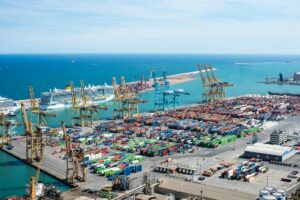
A finalized FTA could significantly boost Indian exports in engineering goods, textiles, machinery, rice, and gems and jewelry by lowering tariffs and improving market access. Export-oriented sectors listed on Indian stock exchanges, especially manufacturing and logistics companies, could benefit from higher trade volumes.
Energy companies and refiners may gain from long-term supply agreements and pricing stability, while infrastructure and construction firms could see increased project opportunities due to rising GCC investments in India. For investors, deeper trade integration could reduce external trade risks and support currency stability through stronger export inflows.
| Sector | Expected Impact |
| Energy | Stable crude and LNG supply partnerships |
| Manufacturing | Export growth through tariff reductions |
| Logistics & Shipping | Higher trade volume and freight demand |
| Gems & Jewelry | Improved access to GCC gold markets |
| Investments | Higher sovereign and private GCC capital inflows |
What Happens Next in India–GCC Free Trade Agreement
Negotiation rounds are expected to focus on tariff structures, services trade, digital commerce, and investment protection frameworks. Policymakers will likely prioritize sectors with high trade sensitivity such as petrochemicals, energy, and agricultural exports.
If concluded, the FTA could reshape India’s West Asia trade strategy and complement existing agreements with UAE and ongoing global trade negotiations. Analysts expect the agreement to act as a long-term trade stabilizer amid global economic uncertainty and evolving supply chain realignments.
Frequently Asked Questions
What is the India–GCC Free Trade Agreement?
It is a proposed trade pact between India and the GCC bloc aimed at reducing tariffs, boosting investment, and expanding bilateral trade across goods and services.
Why is the GCC important for India’s economy?
The GCC is India’s largest trading partner bloc, a major energy supplier, and a key source of FDI and remittances from Indian workers.
Which sectors will benefit the most from the FTA?
Engineering goods, textiles, energy, logistics, gems and jewelry, and manufacturing sectors are expected to see the biggest gains.
When will the India–GCC FTA be finalized?
The timeline depends on negotiation rounds, but discussions formally began in February 2026 after signing the Joint Statement and ToR.
Conclusion
The launch of India–GCC FTA negotiations marks a strategic shift in India’s trade and geopolitical alignment toward energy-rich and investment-heavy Gulf economies. If successfully concluded, the agreement could enhance export competitiveness, secure energy supply chains, and attract long-term capital inflows. From a market and policy perspective, the FTA has the potential to become a key pillar of India’s global trade strategy in an increasingly fragmented economic landscape.

BBW News Desk is the editorial team of BigBreakingWire, a digital newsroom focused on global finance, markets, geopolitics, trade policy, and macroeconomic developments.
Our editors monitor government decisions, central bank actions, international trade movements, corporate activity, and economic indicators to deliver fast, fact-based reporting for investors, professionals, and informed readers.
The BBW News Desk operates under the editorial standards of BigBreakingWire, prioritizing accuracy, verified information, and timely updates on major global developments.







Be First to Comment