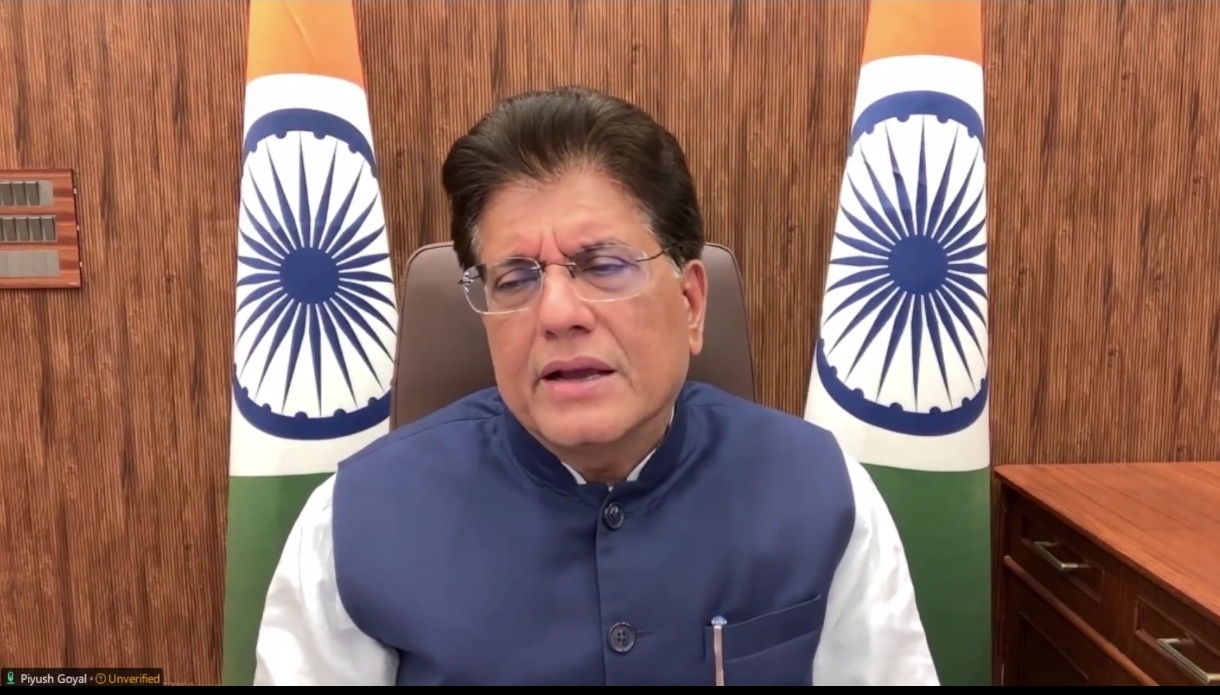
India’s Commerce and Industry Minister Piyush Goyal has urged businesses to actively use the India–EFTA Trade and Economic Partnership Agreement (TEPA), which includes a legally binding $100 billion foreign direct investment commitment from four European nations.
The agreement, signed with Switzerland, Norway, Iceland and Liechtenstein, is expected to create around 1 million jobs in India while expanding trade, technology cooperation and services exports.
Officials say the deal represents a new model in global trade agreements because it combines tariff reductions with a legally enforceable investment pledge tied to job creation.
The development comes as India accelerates a broader trade strategy with Europe, including recently concluded agreements with the United Kingdom and the European Union.
What Happened in the India–EFTA Trade and Economic Partnership Agreement
The India–EFTA Trade and Economic Partnership Agreement marks one of the most significant trade deals India has signed with Europe in recent years.
Under the pact, the four EFTA members have committed to investing $100 billion in India over the coming years. The agreement also includes a provision that could lead to the creation of approximately 1 million jobs across India’s manufacturing, services and technology sectors.
The investment commitment is written directly into the agreement as a legally binding clause rather than a voluntary pledge or memorandum of understanding.
| Key Element | Details |
| Trade Agreement | India–EFTA Trade and Economic Partnership Agreement (TEPA) |
| EFTA Members | Switzerland, Norway, Iceland, Liechtenstein |
| Investment Commitment | $100 billion FDI |
| Estimated Job Creation | 1 million jobs |
| Services Market Access | Nearly 100% access across EFTA economies |
India has also included a safeguard clause allowing it to withdraw certain trade benefits if the investment commitments are not fulfilled.
This mechanism is unusual in global trade agreements and signals India’s shift toward investment-linked trade frameworks.
Why the India–EFTA Trade Agreement Happened
India’s recent trade negotiations reflect a strategic effort to integrate more deeply with advanced economies while attracting long-term capital.
European countries within the EFTA bloc are major investors in sectors such as pharmaceuticals, clean energy, advanced manufacturing, precision engineering and financial services.
For India, the agreement offers access to advanced technologies and capital while helping domestic companies expand into European markets.
The deal also comes at a time when global supply chains are being restructured following pandemic disruptions, geopolitical tensions and growing trade protectionism.
Many multinational companies are increasingly looking for manufacturing and technology partnerships outside China, which gives India an opportunity to position itself as an alternative production hub.
Bigger Context Behind India’s Trade Strategy with Europe
The TEPA agreement is part of a broader shift in India’s international trade policy.
After years of cautious engagement in trade agreements, India has recently accelerated negotiations with several advanced economies including the United Kingdom, the European Union and Australia.
These agreements are designed to expand export markets for Indian services such as IT, engineering, healthcare, education and financial services.
They also help India strengthen economic ties with Europe at a time when geopolitical uncertainty is rising in global trade routes and energy markets.
India’s strategy increasingly focuses on combining trade liberalization with investment commitments and technology partnerships.
| India’s Recent Trade Agreements | Status |
| India–EFTA TEPA | Signed and moving toward implementation |
| India–UK Free Trade Agreement | Signed July 2025, awaiting ratification |
| India–EU Trade Agreement | Negotiations concluded |
| India–Australia Economic Cooperation Agreement | Operational |
These deals collectively represent India’s attempt to expand export competitiveness while attracting large-scale foreign investment.
How the Trade Deal Affects Markets, Companies, Investors and the Economy
The $100 billion investment commitment could have meaningful implications for India’s industrial sectors.
European companies are expected to expand investments in pharmaceuticals, precision manufacturing, renewable energy equipment, shipping technology and financial services.
India’s services sector may benefit significantly because the agreement provides wide market access for professionals including engineers, architects, IT specialists and healthcare workers.
For investors, the deal signals continued foreign interest in India’s long-term economic growth, particularly in sectors aligned with the country’s industrial policies.
| Potential Sector Impact | Possible Economic Effects |
| Manufacturing | Technology transfer and new industrial investments |
| Services Exports | Greater access for IT, engineering and consulting firms |
| Renewable Energy | European investment in green technologies |
| Financial Services | Expansion of European financial institutions in India |
The agreement also protects sensitive domestic sectors including agriculture and dairy, limiting potential disruptions to Indian farmers.
India has maintained restrictions on genetically modified agricultural imports, reflecting domestic policy priorities.
What Happens Next in India–Europe Trade Cooperation
The immediate focus now shifts toward implementing the TEPA agreement and ensuring the promised investments materialize.
Industry groups and government agencies are expected to work together to connect Indian businesses with companies from the EFTA countries.
Early investment activity has already begun, with Iceland making a $30 million investment in India’s fisheries sector.
Over the coming years, analysts expect the largest inflows to come from Switzerland and Norway, both of which have large sovereign funds and multinational companies looking to expand in Asia.
If the investment targets are achieved, the agreement could significantly strengthen India’s position as a manufacturing and services hub between Europe and Asia.
Frequently Asked Questions
What is the India–EFTA TEPA agreement?
The India–EFTA Trade and Economic Partnership Agreement is a trade deal between India and four European countries Switzerland, Norway, Iceland and Liechtenstein focused on trade, services and investment cooperation.
How much investment is expected under the agreement?
The agreement includes a legally binding commitment for around $100 billion in foreign direct investment into India.
How many jobs could the trade deal create?
Government estimates suggest the agreement could generate approximately 1 million jobs across multiple sectors in India.
Which sectors may benefit most from the deal?
Manufacturing, services exports, renewable energy, technology industries and financial services are expected to see the largest benefits.
Conclusion
The India–EFTA Trade and Economic Partnership Agreement represents a significant evolution in India’s trade diplomacy by linking market access with enforceable investment commitments.
If the $100 billion investment pledge materializes, the agreement could accelerate industrial growth, create large-scale employment and deepen economic ties between India and Europe.
The success of the pact will ultimately depend on how quickly investment projects move from announcements to implementation across India’s manufacturing and services sectors.

BBW News Desk is the editorial team of BigBreakingWire, a digital newsroom focused on global finance, markets, geopolitics, trade policy, and macroeconomic developments.
Our editors monitor government decisions, central bank actions, international trade movements, corporate activity, and economic indicators to deliver fast, fact-based reporting for investors, professionals, and informed readers.
The BBW News Desk operates under the editorial standards of BigBreakingWire, prioritizing accuracy, verified information, and timely updates on major global developments.











Be First to Comment