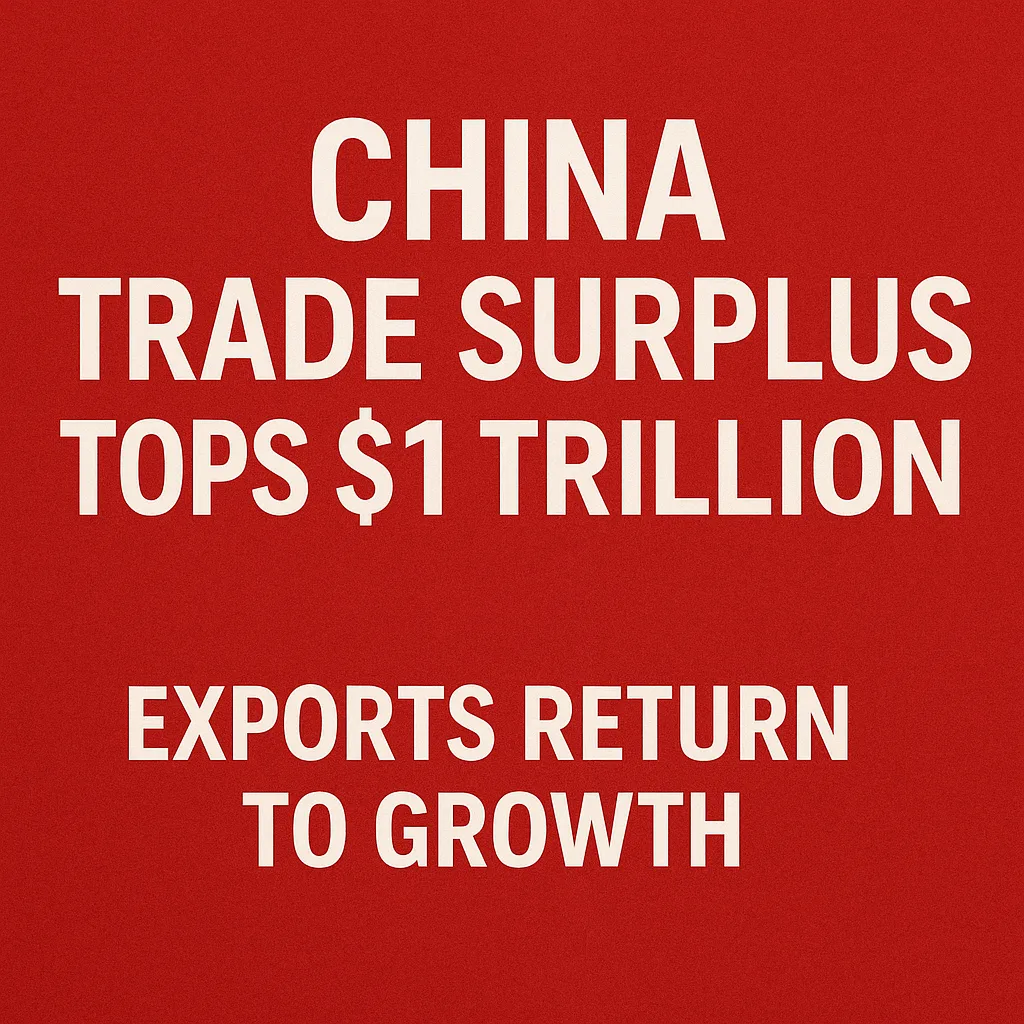
China’s trade sector showed strong momentum in November, with exports rising 5.9% year-on-year, beating market expectations of 4%. Imports grew 1.9% YoY, slower than the 3% forecast. This performance pushed China’s annual trade surplus above $1 trillion for the first time.
Key Highlights at a Glance
- Exports: +5.9% YoY (better than expected)
- Imports: +1.9% YoY (weaker than forecast)
- Monthly trade surplus: $112 billion
- Annual trade surplus: Surpassed $1 trillion for the first time
- US–China trade surplus (Nov): $23.74 billion
- US–China trade surplus (Jan–Nov): $257.15 billion
Why This Matters
Foreign demand remains a major support for China’s economy as domestic consumption weakens and the property sector struggles. Exports have contributed nearly one-third of total GDP growth this year.
Diversifying export markets beyond the United States has helped China stay on track to meet its ~5% GDP growth target.
Category-Wise Import & Export Breakdown
1. Copper Concentrates
- November: 2.53 million tonnes (up from October’s 2.45m tonnes)
- Jan–Nov: 27.61 million tonnes (vs. 25.57m tonnes last year)
2. Natural Gas Imports
- November: 11.95 million tonnes (up from 9.78m tonnes in October)
- Jan–Nov: 114.48 million tonnes (down from 120.12m tonnes YoY)
3. Iron Ore Imports
- November: 110.54 million tonnes (slightly below October’s 111.31m tonnes)
- Jan–Nov: 1,139.20 million tonnes (up from 1,123.61m tonnes YoY)
4. Rare Earth Exports
- November: 5,493.9 tonnes (up from 4,343.5 tonnes in October)
- Jan–Nov: 58,193.1 tonnes (vs. 52,104.9 tonnes last year)
5. Steel Product Exports
- November: 9.98 million tonnes (higher than October’s 9.78m tonnes)
- Jan–Nov: 107.72 million tonnes (vs. 100.99m tonnes YoY)
6. Aluminium Exports (Unwrought + Products)
- November: 570,000 tonnes (up from 503,000 tonnes in October)
- Jan–Nov: 5.589 million tonnes (down from 6.159m tonnes last year)
7. Oil Product Exports
- November: 5.12 million tonnes (up from 4.52m tonnes)
- Jan–Nov: 52.65 million tonnes (slightly below last year’s 54.40m tonnes)
8. Soybean Imports
- November: 8.11 million tonnes (down from October’s 9.48m tonnes)
- Jan–Nov: 103.79 million tonnes (higher than last year’s 97.09m tonnes)
Frequently Asked Questions
Q1: Why did China’s exports grow faster than expected in November?
Exports rebounded due to stronger demand from emerging markets, increased shipments of electronics, and improved global supply chain conditions.
Q2: What pushed China’s trade surplus above $1 trillion?
The surplus surged because export growth stayed resilient while import growth remained modest, widening the overall gap throughout the year.
Q3: How does this trade performance affect China’s GDP target?
Stronger exports help offset weak domestic consumption, keeping China on track to meet its GDP growth target of around 5% for the year.
Are There Weak Spots?
Yes. Several indicators point to underlying economic stress:
- Natural gas imports fell on a year-to-date basis.
- Aluminium exports remain below last year’s levels.
- Domestic demand continues to lag due to the property downturn.
Final Summary
China’s November trade report shows a strong export recovery, moderate import growth, and a record-breaking annual surplus above $1 trillion. This momentum is crucial for stabilizing the economy as domestic sectors remain under pressure.
Update: China’s Export Power Expected to Grow Further
Morgan Stanley says China’s share of global goods exports could rise from about 15% today to 16.5% by the end of the decade. Economists credit China’s strong advanced manufacturing, its ability to spot changing global demand early, and its readiness to quickly invest and expand production.

BBW News Desk is the editorial team of BigBreakingWire, a digital newsroom focused on global finance, markets, geopolitics, trade policy, and macroeconomic developments.
Our editors monitor government decisions, central bank actions, international trade movements, corporate activity, and economic indicators to deliver fast, fact-based reporting for investors, professionals, and informed readers.
The BBW News Desk operates under the editorial standards of BigBreakingWire, prioritizing accuracy, verified information, and timely updates on major global developments.






































Be First to Comment