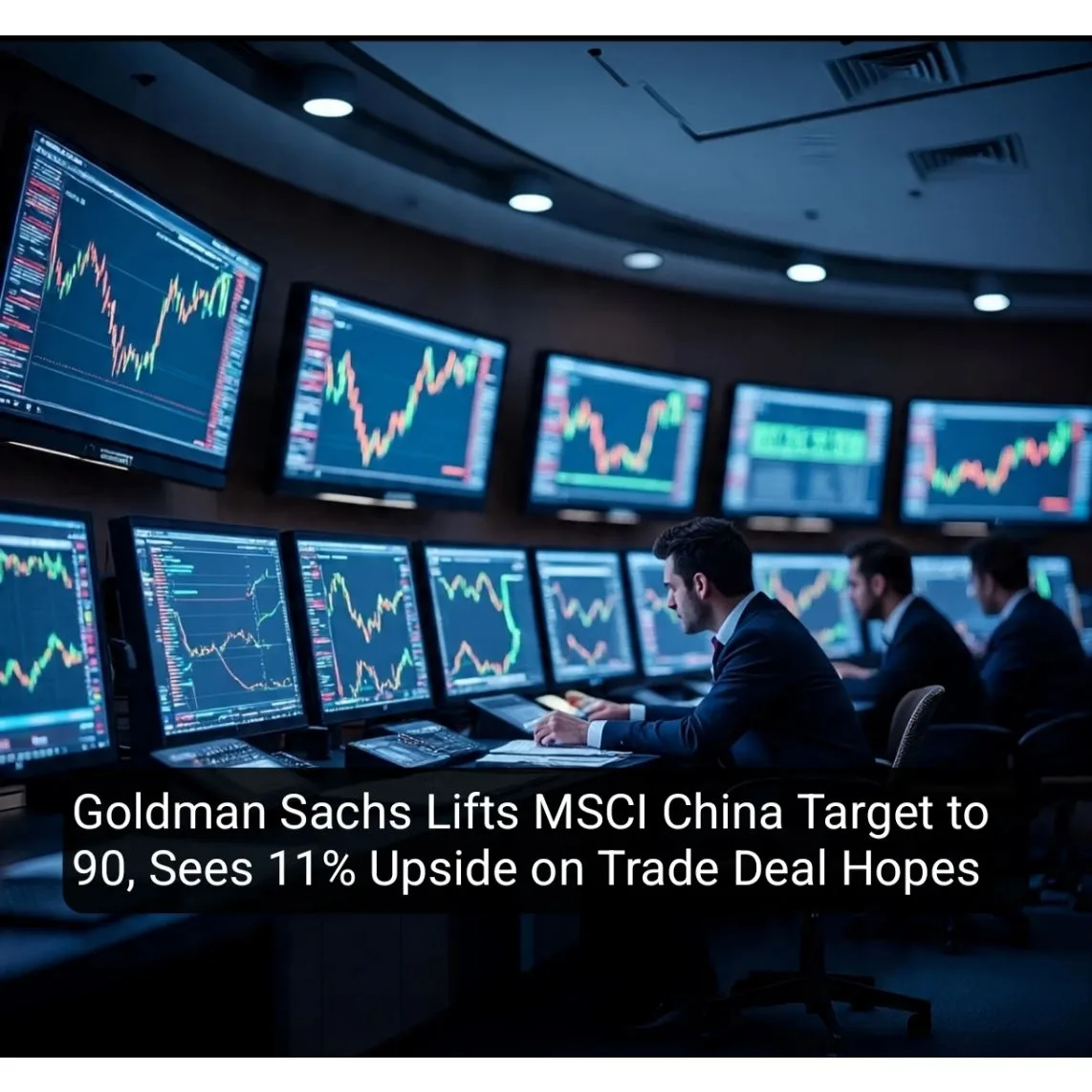
Goldman Sachs has raised its 12-month target for the MSCI China Index to 90, up from its earlier forecast of 85. This new target suggests an 11% upside from Friday’s closing level. The upgrade is based on growing optimism around a potential trade deal between the US and China, which analysts believe could remove a key obstacle for Chinese markets.
According to a note from Goldman strategists, including Kinger Lau, a trade deal would likely boost investor confidence. They pointed to recent trends in other countries that have signed trade agreements with the US in recent months, where stock markets responded positively. A similar agreement with China, they say, could serve as a “market-clearing event” for Chinese equities.
Chinese stocks have already shown strength, gaining for three consecutive weeks. This rally has been fueled by trade deals signed by countries like Japan, raising hopes that China could follow a similar path. US and Chinese officials are set to meet again to discuss extending their current tariff pause beyond the mid-August deadline.
Investors are also watching for signals from China’s upcoming Politburo meeting, where policymakers are expected to outline plans for the second half of the year. While Goldman does not expect a major stimulus package immediately, some supportive measures may be introduced later in the year as signs of economic weakness appear.
Goldman analysts noted that despite the positive momentum, there are risks to the rally. The MSCI China Index has already surged over 25% this year. As a result, they recommend investors focus on selective stock picking. The firm has raised its ratings on the insurance and materials sectors to “overweight” and downgraded banks and real estate.
In May, Goldman had already revised its MSCI China target back to pre-April levels after US President Donald Trump announced large tariff rollbacks. Since that move, the index has climbed nearly 8%.
Overall, improving US-China relations, easing regulatory pressure, a stronger currency, and favorable liquidity conditions are all seen as factors supporting Chinese equities in the near term.
Mainland Chinese Investors Now Lead in Hong Kong Stock Market
Mainland China investors have become the biggest drivers of the Hong Kong equity market, overtaking foreign funds, according to a recent research note by HSBC analysts. This shift is mainly due to strong buying activity through the Southbound Stock Connect program, which allows mainland investors to invest in Hong Kong-listed stocks. So far this year, they’ve bought US$103 billion worth of shares — the highest annual inflow since the program began.
Despite this record amount, HSBC points out that it still represents only a small portion of the total potential. Chinese households are estimated to hold over US$6 trillion in “excess cash,” which means there’s still significant room for more investment. This growing interest has also contributed to a revival in Hong Kong’s IPO market. HSBC analysts believe Hong Kong will increasingly act as a key gateway for Chinese households looking to invest in global and regional markets.










Be First to Comment