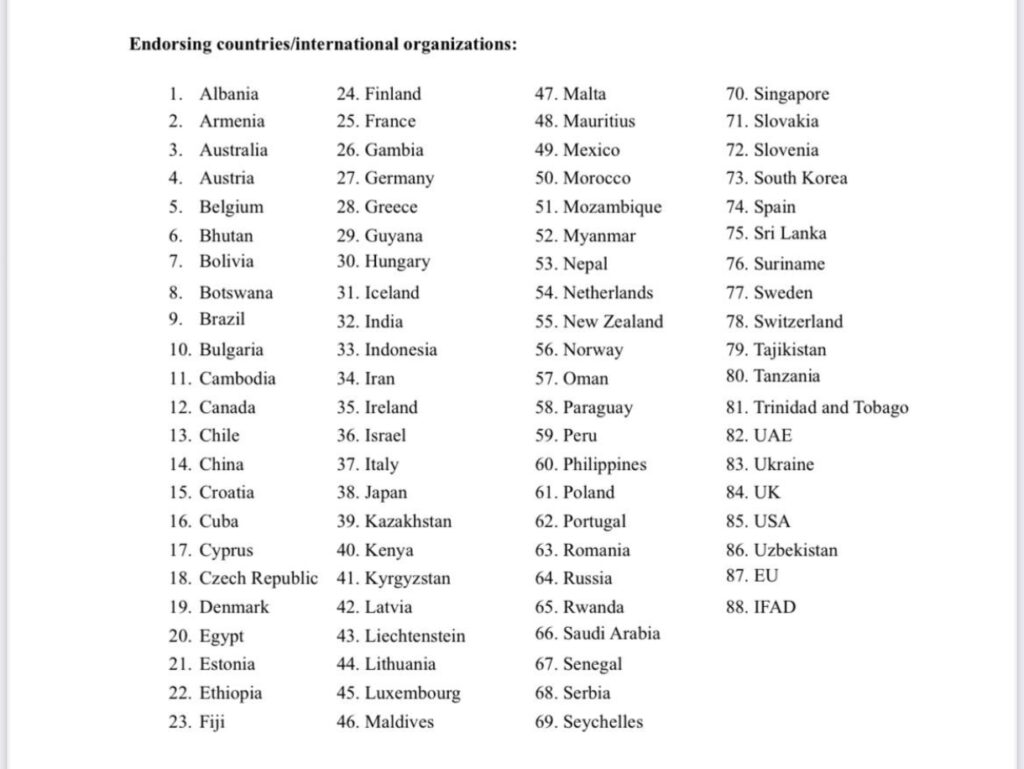
The AI Impact Summit 2026 concluded with the adoption of the New Delhi Declaration, endorsed by 88 countries and international organisations. The framework focuses on global AI cooperation across seven pillars including trusted AI, economic growth, and democratized AI access. The declaration promotes voluntary, non-binding governance mechanisms aimed at equitable AI adoption and energy-efficient infrastructure. The policy direction signals India’s push to position itself as a central player in global AI governance and digital economy strategy.
What Happened in AI Impact Summit 2026
The AI Impact Summit 2026, held on 18–19 February in New Delhi, brought together policymakers, international organisations, and technology stakeholders to establish a coordinated global vision for artificial intelligence governance. The summit concluded with the formal adoption of the New Delhi Declaration on AI Impact, a voluntary global framework focused on collaboration, trust, and inclusive AI growth.
A total of 88 countries and international organisations endorsed the declaration, highlighting growing multilateral consensus around AI policy coordination. Key institutional themes included democratizing AI resources, AI for science, workforce development, and resilient infrastructure to support large-scale AI deployment.
| Key Event | AI Impact Summit 2026 |
| Location | New Delhi, India |
| Dates | 18–19 February 2026 |
| Endorsements | 88 Countries and International Organisations |
| Core Framework | New Delhi Declaration on AI Impact |
Why Did the AI Impact Declaration Happen
The declaration reflects rising global urgency to regulate and coordinate AI development amid rapid technological acceleration and geopolitical competition in AI leadership. Countries are increasingly concerned about AI governance gaps, data sovereignty, and the concentration of AI infrastructure in a few advanced economies.
India’s strategic push for “AI for All” aligns with its broader digital public infrastructure model, which includes Aadhaar, UPI, and India Stack. By advocating accessible and open AI ecosystems, India is positioning itself as a bridge between developed and emerging economies in the AI policy landscape.
The voluntary nature of the framework also indicates that nations are prioritizing flexible governance over rigid regulation, especially as AI innovation cycles outpace traditional policymaking timelines.
Bigger Context Behind AI Governance in Economy and Geopolitics
The New Delhi Declaration comes at a time when AI is becoming a core pillar of economic competitiveness, similar to semiconductors and critical minerals. The United States, China, and the European Union are investing billions of dollars annually in AI infrastructure, research, and regulatory frameworks.
For emerging economies, access to AI computing power, datasets, and talent remains uneven. The summit’s focus on democratizing AI resources signals a geopolitical attempt to prevent technological fragmentation and digital inequality across regions.
Additionally, energy consumption by large AI models has become a strategic concern. Energy-efficient AI systems and resilient infrastructure mentioned in the declaration reflect growing policy attention to sustainability as global AI demand increases alongside data center expansion.
| Seven Pillars of AI Cooperation | Strategic Focus |
| Democratizing AI Resources | Affordable and accessible AI infrastructure |
| Economic Growth & Social Good | AI-led productivity and development |
| Secure & Trusted AI | Trust, safety, and governance standards |
| AI for Science | Global research collaboration |
| Social Empowerment | Inclusive AI adoption |
| Human Capital Development | Skilling and reskilling workforce |
| Resilient & Efficient AI | Energy and infrastructure efficiency |
How the AI Impact Declaration Affects Markets, Companies, Investors, and Economy
The declaration strengthens the long-term policy outlook for AI investments, particularly in cloud infrastructure, semiconductor supply chains, and data center development. Technology firms, AI startups, and infrastructure companies could benefit from increased international collaboration and funding frameworks.
For investors, the policy emphasis on open-source AI and scalable platforms such as the Global AI Impact Commons suggests broader adoption across sectors including healthcare, finance, governance, and education. This could accelerate enterprise AI spending and digital transformation budgets globally.
Government-backed AI workforce development and reskilling initiatives may also reshape labor markets, especially in services-heavy economies like India, where AI integration is expected to influence productivity growth and employment patterns over the next decade.
| Sector | Expected Impact |
| Technology & AI Firms | Higher global collaboration and platform scaling |
| Data Centers & Cloud | Rising demand for AI infrastructure |
| Education & Workforce | Increased AI skilling and reskilling programs |
| Public Services | Expanded AI-led governance solutions |
What Happens Next in Global AI Policy and Cooperation
The New Delhi Declaration is voluntary and non-binding, which means implementation will depend on national policy alignment and institutional adoption over the coming years. Countries are expected to integrate the guiding principles into domestic AI strategies, regulatory frameworks, and innovation policies.
Future developments may include expansion of the Trusted AI Commons, cross-border AI research networks, and standardized governance benchmarks. This could lead to a more structured global AI governance architecture similar to climate or digital trade frameworks.
India’s leadership role in hosting the summit may also influence its ambition to become a global AI hub, attracting foreign investment, research partnerships, and technology collaborations in the Rs trillion-scale digital economy.
Frequently Asked Questions
What is the New Delhi Declaration on AI Impact?
It is a global voluntary framework adopted by 88 countries and organisations to promote trusted, inclusive, and collaborative AI development.
Why is the AI Impact Summit 2026 significant?
The summit establishes a multilateral approach to AI governance, focusing on access, trust, and economic growth through coordinated global policies.
Is the AI declaration legally binding?
No, the framework is voluntary and non-binding, designed to guide cooperation rather than impose regulatory obligations.
How does this impact India’s AI strategy?
It strengthens India’s position as a global AI policy leader and supports its push for inclusive digital infrastructure and AI-driven economic growth.
Conclusion
The adoption of the New Delhi Declaration marks a strategic shift toward coordinated global AI governance at a time of rising technological competition and economic transformation. As AI becomes a core driver of productivity, innovation, and geopolitical influence, multilateral frameworks like this are likely to shape investment flows, regulatory standards, and digital infrastructure policies. The long-term impact will depend on how effectively countries translate voluntary principles into actionable national AI strategies and cross-border collaborations.

BBW News Desk is the editorial team of BigBreakingWire, a digital newsroom focused on global finance, markets, geopolitics, trade policy, and macroeconomic developments.
Our editors monitor government decisions, central bank actions, international trade movements, corporate activity, and economic indicators to deliver fast, fact-based reporting for investors, professionals, and informed readers.
The BBW News Desk operates under the editorial standards of BigBreakingWire, prioritizing accuracy, verified information, and timely updates on major global developments.










Be First to Comment